This guide on the Top 5 Headless Frontend Framework for Laravel explores how headless eCommerce builds fast, flexible, modern online stores.
Top 5 Headless Frontend Framework for Laravel
Headless means the frontend is separated from the backend. This setup improves speed and makes updates easier without disturbing the core system.
Running an online store today is not simple. Handling traffic, custom features, and integrations can become complex without the right solution.
That’s where Bagisto Headless eCommerce comes in. It is built to give developers simple, powerful tools to create modern and high-performing stores.
However, not every frontend framework is a perfect fit with headless eCommerce, so choosing the right one is essential.
What Are the Best Frontend Frameworks for Headless?
When you’re making a headless store using Laravel, picking the right frontend framework is super important.
Popular choices like Next.js, Nuxt 3, Vue Storefront, Remix, and Astro offer a solid foundation for building quick and modern websites.
These frameworks use JavaScript and assist developers in creating smooth, responsive, and scalable user experiences.
However, not every frontend framework is a perfect match for headless eCommerce projects.
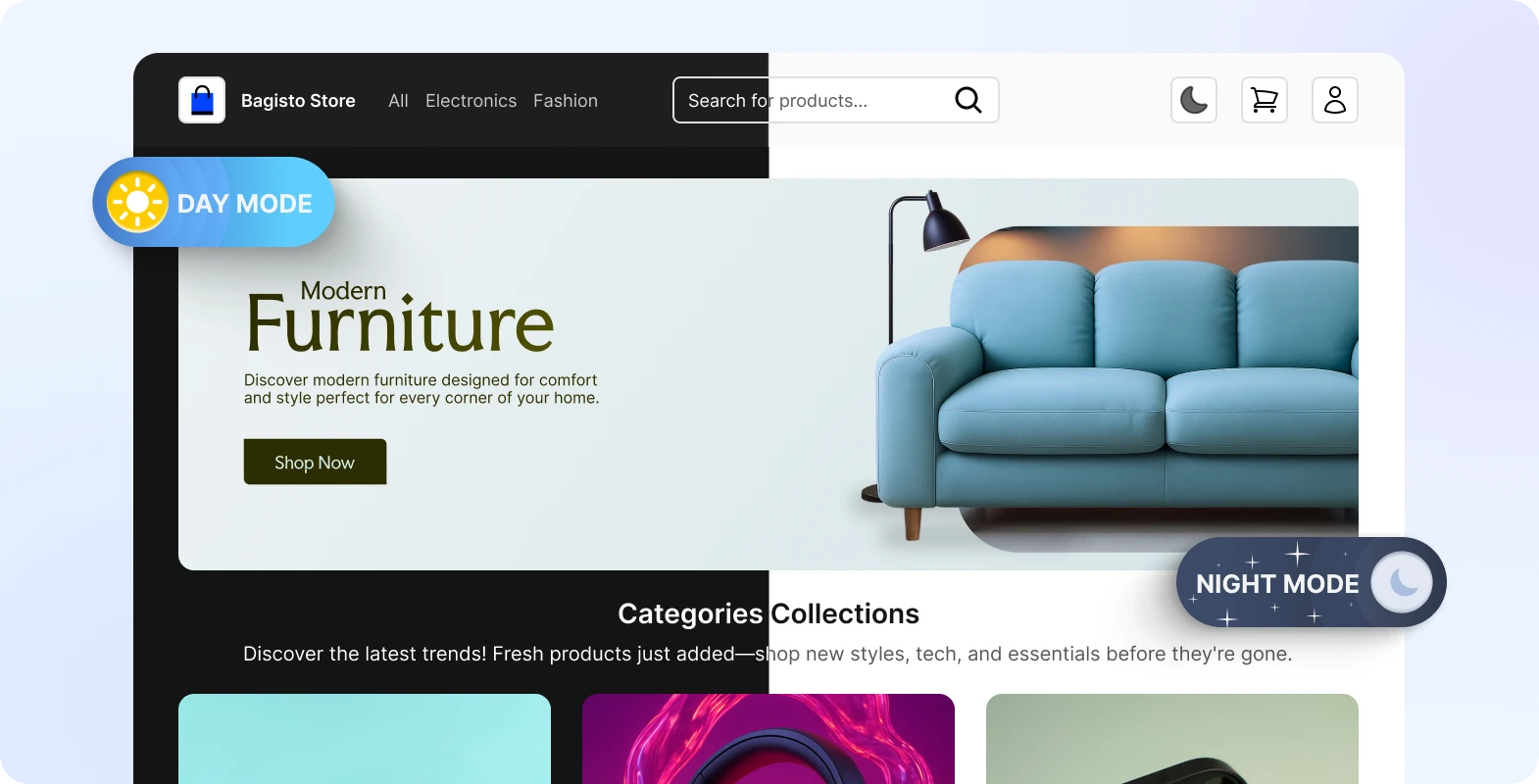
1) Next.js
Next.js is a really fast and powerful React framework widely used for headless eCommerce.
Built on an API-first approach, integration becomes simple with platforms like Magento, Shopify, BigCommerce, and WooCommerce.
It offers powerful features like hybrid rendering, automatic code splitting, and makes development smooth and efficient for Bagisto Headless eCommerce projects.
It can do both server-side rendering (SSR) and static site generation (SSG), which helps make online stores quick and easy to grow.
Big brands like McDonald’s, Walmart, Apple, and Nike use it to create cool web experiences.
With pre-rendered pages that help with SEO management and support for PWAs, static, and dynamic apps, Next.js is a great option for headless Laravel stores.
Why Choose Next.js?
Pros:
- Excellent SEO thanks to server-side rendering
- High speed because of smart bundling and prefetching
- Easy scalability for growing businesses
- Strong support from the React ecosystem
Cons:
- Requires React knowledge
- Advanced customization can be complex
- Higher hosting cost if heavily using SSR
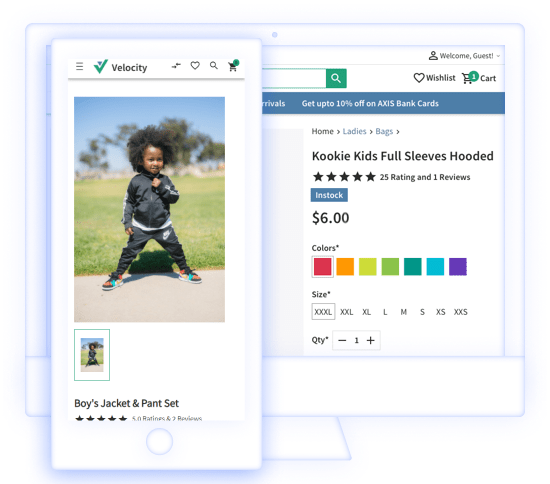
2) Nuxt 3
Nuxt 3 is a new framework based on Vue 3 and is popular for headless eCommerce.
Nuxt 3 also prepares for marketplaces and B2B with a flexible design for complicated commerce models.
With its Nitro engine and hybrid rendering (SSR, SSG, SPA), it offers great scalability for composable setups.
This makes it a good choice for expanding headless Laravel stores.
Why Choose Nuxt 3?
Pros
- Strong SEO with SSR support
- Clean and developer-friendly structure.
- Good performance with the Nitro engine.
Cons
- Requires knowledge of Vue 3
- Smaller ecosystem compared to Next.js
- Advanced configurations can be complex
3) Vue Storefront
Vue Storefront is a Vue-based framework designed to optimize headless eCommerce solutions for online stores and marketplaces.
It works as a backend-agnostic frontend that connects seamlessly through APIs.
Built on an API-first approach, integration becomes simple with platforms like Magento, Shopify, BigCommerce, and WooCommerce.
Additionally, the framework supports marketplace and B2B readiness for handling complex commerce models.
With built-in PWA support, SSR, and modern JavaScript, it ensures fast performance and strong scalability for composable setups.
It is designed to deliver excellent SEO and a smooth user experience.
Why Choose Vue Storefront?
Pros
- Commerce-focused architecture
- Built-in PWA and SEO optimization
- Easy multi-platform integration
Cons
- Requires Vue expertise
- Smaller ecosystem than React
- Advanced features need customization

4) Remix
Remix is a modern React framework focused on performance and a better user experience.
It is designed to build fast, dynamic, and data-driven headless storefronts.
It works well with API driven backends and supports strong scalability for composable setups.
This makes it a flexible option for growing Bagisto Headless eCommerce projects.
Remix uses nested routing and smart data loading to improve speed and reduce unnecessary requests.
It also enhances SEO with server-side rendering and optimized page delivery.
Why Choose Remix?
Pros
- Excellent performance with smart data handling
- Clean routing system
- Strong focus on user experience
Cons
- Smaller ecosystem compared to Next.js
- Requires solid React knowledge
- Fewer ready-made commerce integrations
5) Astro
Astro is a new frontend framework that aims to create super-fast websites while using very little JavaScript.
It’s perfect for stores that focus on content and performance without a traditional backend.
It works well with an API first design and can easily connect to Bagisto Headless eCommerce using REST or GraphQL APIs.
Astro can also manage large, flexible setups thanks to its island architecture.
Astro improves loading speed and Core Web Vitals by sending minimal JavaScript, while supporting static generation and partial hydration.
Why Choose Astro?
Pros
- Extremely lightweight frontend output
- Great performance and fast loading
- Flexible integration with multiple frameworks
Cons
- Not fully commerce-focused
- Limited built-in marketplace features
- Requires extra setup for complex B2B logic
Bagisto Engine: The Perfect Backend for Modern Frontends
When you select a frontend framework like Next.js, Nuxt 3, Vue Storefront, Remix, or Astro, you also need a strong backend that can handle modern setups.
That’s where Bagisto Headless Commerce comes in as the best choice.
Bagisto is an API first Laravel eCommerce platform made for headless and composable commerce.
Its API-driven design lets it connect easily with any modern frontend.
It’s built to work well with frameworks like Next.js, Vue Storefront, and Nuxt 3, which helps in creating fast and flexible online stores.
Bagisto can handle B2C, B2B, Marketplace, and PWA scenarios, making it great for both simple shops and more complicated commerce systems.
With its modular and scalable architecture, Bagisto is a perfect fit for composable commerce setups where frontend and backend evolve independently.
Which Framework Should You Choose?
The best option is the one that fits your growth plans and the expertise of your developers.
If you want great SEO, the ability to grow with your business, and a big community, Next.js is a strong choice.
For teams that use Vue and want something flexible with a modern setup, Nuxt 3 is a good pick.
If your goal is online selling with marketplace and PWA support, Vue Storefront is a strong choice.
For high-performance React projects, Remix fits well, while Astro suits content-heavy stores needing fast load times.
Decision Guidance by Business Size
A) Startups & Small Businesses:
Go for a framework that’s simple to set up and can grow with you, like Nuxt 3 or Next.js.
B) Growing Mid-Size Businesses:
Next.js or Vue Storefront are great for expanding into marketplaces and B2B.
C) Large Enterprises:
Next.js or Vue Storefront, paired with Bagisto Headless Commerce, provides excellent scalability and a flexible architecture.
Ultimately, the right framework for you depends on how quickly you want to grow, how complex your store is, and how much flexibility your business requires.
Final Thoughts
Headless commerce is shaping the future of modern eCommerce. It allows businesses to create online stores that are faster and can grow easily.
Picking the right frontend framework is crucial, but having a solid backend like Bagisto Headless Commerce really makes a difference.
When combined, they help you build strong and future-ready eCommerce experiences.
No matter if you are a startup, a growing brand, or a big company, headless architecture helps you adjust quickly and stay ahead in a competitive market.

. . .

Be the first to comment.