A step-by-step payment setup in a multi-vendor marketplace means building a clear system to collect customer payments, and securely transfer payouts to vendors.
If you are building a multi-vendor marketplace, payments are the foundation of your business, not just an added feature.
Choosing the wrong payment model can cause delayed vendor payouts, compliance issues, and loss of trust from sellers and customers.
Every order depends on a secure payment system that manages commissions, vendor payouts, split or escrow payments, and refunds accurately.
In this guide, you will learn how marketplace payments work and how to choose the right model.
You will also understand how to set up the system step by step in simple terms.
Step-by-Step Process for Setting Up Payments in a Multi-Vendor Marketplace
Step 1: Understand How Payments Work in a Multi-Vendor Marketplace
In a multi-vendor marketplace, there are three key parties involved:
- Customer
- Vendor
- Marketplace Admin
When a customer places an order, the full amount is collected at checkout. From that amount
- The marketplace keeps its commission.
- The remaining amount is transferred to the vendor.
There are two common payment flow models:
1. Aggregator Model
The platform collects 100% of the order amount and later distributes payouts to vendors after deducting commission.
2. Split Payment Model
The payment gateway automatically splits the transaction in real time between the admin and the vendors.
3. Escrow Model
Funds are held in an escrow wallet and released to vendors after order confirmation or delivery, increasing trust and reducing disputes.
Understanding these models helps you choose the right gateway and compliance structure.
Step 2:Identify Essential Features of a Marketplace Payment Gateway
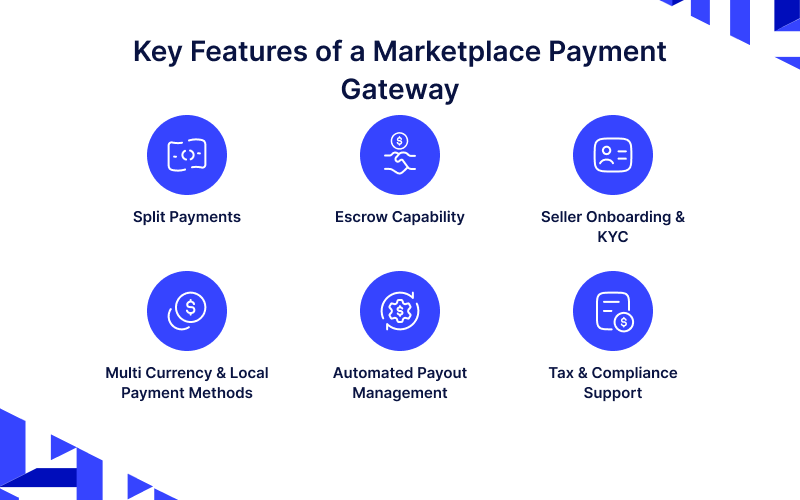
A payment gateway for a marketplace needs to have more advanced features than just basic checkout processing.
Split Payments
The gateway should automatically split the money between the admin and the vendors.
Doing it manually can lead to mistakes in accounting and increase the risk of not following the rules.
Example:
If a ₹2,000 order has 10% commission, ₹200 goes to admin and ₹1,800 to the vendor automatically, like on Amazon.
Escrow Capability
Escrow helps protect both buyers and sellers by holding onto the money for a little while.
This helps reduce fraud and makes sure that vendors get paid only after they have done what they promised.
Example:
On eBay, payment can be held until the buyer confirms delivery.
Seller Onboarding & KYC
Having a system for onboarding vendors and checking their identity (KYC) helps make sure that everything is following the rules and stops fraud.
Example:
Platforms like Flipkart require PAN, GST, and bank details before sellers start selling.
Multi-Currency & Local Payment Methods
If you are working around the world, it’s really important to support multiple currencies.
Automated Payout Management
Having flexible payout schedules (like daily, weekly, or based on milestones) helps keep vendors feeling trusted.
Example:
Vendors may receive payouts weekly or 7 days after delivery confirmation.
Tax & Compliance Support
It’s really important to have support for things like VAT, GST, chargebacks, reporting, and audit logs to keep everything financially clear.
Example:
Platforms like Amazon automatically calculate GST, generate invoices, and keep records for audits and disputes.
Step 3: Select the Right Payment Gateway
Choosing the right gateway is super important because it affects how successful payments are, how happy vendors are, and how well everything runs.
Here are some popular payment providers that are ready for marketplaces:\
Stripe (Stripe Connect)
Stripe Connect payment gateway supports real-time split payments, escrow features, making it ideal for global marketplaces.
PayPal
Marketplace PayPal Commerce payment gateway offers chained and parallel payments, has a worldwide reach, and provides strong protection for buyers.
Razorpay
Adyen
This is a top notch solution that has strong fraud detection and supports payments from all over the world.
Mangopay
This one focuses on escrow wallets and has a regulated marketplace setup, especially in Europe.
Checkout.com
This is a global payment provider that works with APIs and has advanced fraud protection and support for multiple payment methods.
Before you start integrating, make sure to compare:
- Transaction fees
- Settlement timelines
- KYC requirements
- Regional compliance rules
Step 4: Split Payments vs Escrow: Select the Best Payment Model
Today, many online marketplaces are starting to use:
Split Payments (Popular Choice)
– Automatic commission deductions in real-time
– Quicker payments for vendors
– Less hassle with accounting
This option works best for product marketplaces and platforms with a lot of transactions.
Escrow Payments
– Money is kept safe until the delivery is confirmed
– Helps to lower disputes and fraud
– Increases trust for buyers
This method is ideal for service marketplaces, digital products, rentals, and business to business deals.
A lot of advanced payment systems now provide mixed options that combine both split payment and escrow.
Step 5: Pre-Built vs Custom Payment System: Which One to Choose?
Pre-Built Marketplace Solutions
- Quick to set up
- Includes compliance features
- Automatic split and escrow options
- Less technical risk
- Ideal for new businesses and expanding platforms.
Custom Payment Systems
- Complete control over commission rules
- Adaptable payout guidelines
- Needs solid technical and legal knowledge
- More compliance responsibilities
Best for big companies with specialized engineering and finance teams.
For many marketplaces, using pre made regulated solutions is safer and can grow better.
Step 6: Set Up the Payment System
Follow these steps:
1. Create an account on the marketplace with your selected payment gateway.
2. Finish the KYC and compliance checks for the platform.
- Start the process for onboarding vendors.
- Set the commission rates.
3. Decide on the payout schedules.
4. Turn on the split or escrow features.
5. Test everything in sandbox mode with several vendors.
6. Check refunds, chargebacks, and any failed payment processes.
7 . Only switch to live mode after everything is fully validated.
Step 7: Common Marketplace Payment Issues and How to Fix Them
Handling High Transaction Volumes
- Automated split systems help to lower manual errors in reconciliation.
Cross-Border Compliance
- Different countries have different tax rules, KYC documents, and reporting requirements.
Refunds & Chargebacks
- Make clear refund policies. Decide how to handle commissions when refunds happen.
Building Vendor Trust
- Slow payouts can make sellers leave. Clear payout cycles can help keep them loyal.
High Failure Rates in New Markets
- Provide local payment options like UPI, QR payments, digital wallets, and regional banking methods to boost checkout success.
Step 8: Latest Trends in Multi-Vendor Marketplace Payments
Embedded Finance
Marketplaces are starting to offer wallet systems, credit lines, and working capital options for sellers.
Instant Payouts
Vendors are starting to expect immediate payments instead of waiting for weekly cycles.
AI Fraud Detection
Advanced payment gateways are using AI to spot suspicious transactions and cut down on chargebacks.
Growth of Digital Wallets
Transactions using wallets are increasing worldwide, leading to better approval rates and customer satisfaction.
How Top Marketplaces Handle Payments
Amazon
Amazon uses split payments with delayed payouts. The platform collects the full amount, deducts commission, and releases seller payments on a fixed schedule.
Alibaba Group (Taobao & Tmall)
Alibaba platforms use an escrow-based system. Payment is held and released to sellers after buyer confirmation.
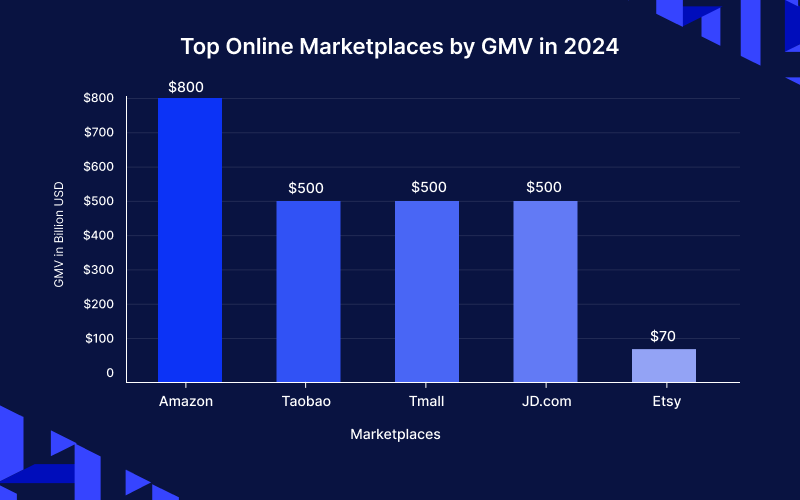
Together, these platforms generated well above US $500 billion in GMV in 2024, making Alibaba one of the strongest marketplace ecosystems in the world.
eBay
eBay follows a managed payments model with temporary payment holds. Funds are released after order confirmation to reduce disputes.
According to Statista, eBay generated over US $70 billion GMV in 2024, but faces strong competition from Amazon and Chinese marketplaces.
Etsy
Etsy collects the full payment, deducts fees and commission, and transfers the remaining amount to sellers on a scheduled payout basis.
According to Statista, Etsy had about 95 million active buyers in 2024, showing strong growth for niche marketplaces.
AliExpress
AliExpress uses escrow protection. Seller payments are released only after the buyer confirms delivery.
It remains a strong cross-border marketplace and continues expanding globally along with other Chinese competitors.
JD.com
JD.com processes payments centrally and releases seller payouts after verification and order completion.
It recorded more than US $500 billion in GMV in 2024, staying ahead of many Western competitors.
Walmart Marketplace
Walmart Marketplace collects customer payments, deducts referral fees, and pays sellers on a fixed payout cycle.
Today, it is one of the leading global e-retailers and continues to grow its third-party seller network to compete with Amazon.
Final thoughts
Your payment system is critical to your multi-vendor marketplace, impacting revenue stability, vendor trust, compliance, and long-term growth.
A secure and well-planned payment system keeps finances organized, strengthens seller trust, and ensures smooth, compliant platform operations.
In today’s landscape, advanced solutions such as split payments and escrow are no longer optional they have become the standard for contemporary marketplaces.
Choosing the right payment gateway and structure allows your marketplace to reduce financial risks, and build lasting trust with buyers and sellers.


. . .

Be the first to comment.