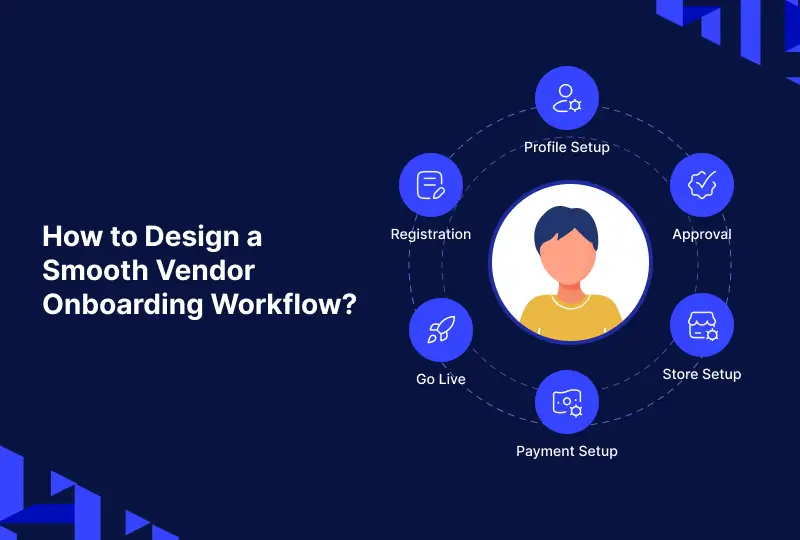
How to Design a Smooth Vendor Onboarding Workflow?
A vendor onboarding workflow is a step-by-step process that facilitates the registration, verification, and launch of vendors on a platform.
It ensures that every vendor has a clear and organized pathway to transition from signing up to being fully active in a multi vendor ecommerce marketplace.
This process also helps standardize the onboarding steps, reduce delays, and provide a professional experience for both the business and its vendors.
In this blog, you will discover how to create an effective system that enhances the vendor experience and accelerates business growth.
What Problems Do Companies Encounter During Setup?
Many companies depend on slow manual onboarding methods that make approvals take longer and cause inefficiencies.
This leads to delays and a heavier workload for their internal teams.
Some common problems are:
- Lengthy and complicated registration forms that lower completion rates
- Not having enough guidance during the onboarding process
- Slow approvals because of manual methods
- Bad communication and no updates in real-time
These problems often confuse vendors and result in higher drop-offs, especially on a growing multi vendor marketplace.
Steps to Design an Effective Seller Onboarding Workflow
Design vendor onboarding workflow helps you complete tasks faster and with fewer errors.
Let’s break it down step by step so you can build a process that actually works.
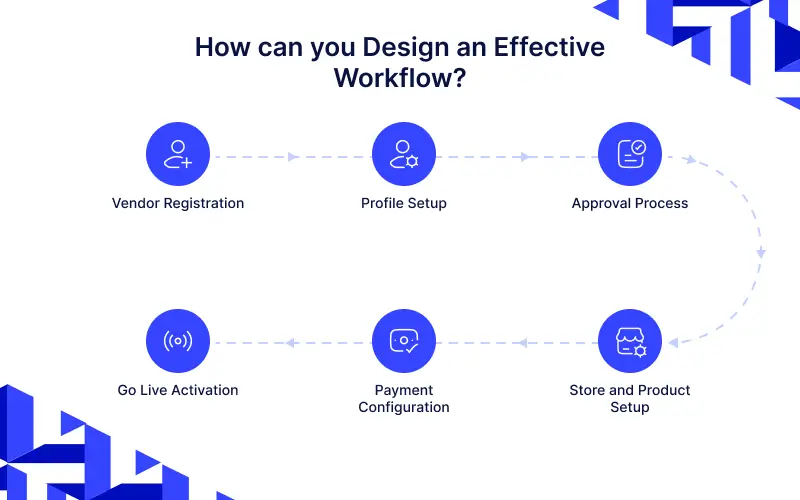
Step 1: Vendor Registration
This is the first step where vendors sign up on the platform by providing basic information like their names, business details, and contact information.
A simple and quick registration process boosts signup rates and minimizes drop-offs.
Step 2: Profile Setup
After registering, vendors complete their profile by adding more detailed business information and any required data.
A well-organized profile helps with better visibility and easy processing in the next stages.
Step 3: Approval Process
Faster approvals enhance the vendor experience and reduce onboarding time.
Clear criteria and automation help ensure quick, accurate verification
Step 4: Store and Product Setup
Vendors set up their stores by adding products, pricing, inventory, and shipping details.
This step prepares them to showcase and sell their products effectively on a multi-vendor marketplace platform.
Step 5: Payment Configuration
Payment methods and commission management structures are established for efficient transactions.
This ensures that vendors can receive payments without any technical issues.
Step 6: Go Live Activation
After completing all the steps, vendors are activated and can start selling on the platform.
The activation process ensures a seamless transition from onboarding to daily operations.
Best Practices for Building a Seamless Vendor Experience
Keeping the onboarding process simple is essential for better completion rates.
A shorter and clearer process improves overall user experience.
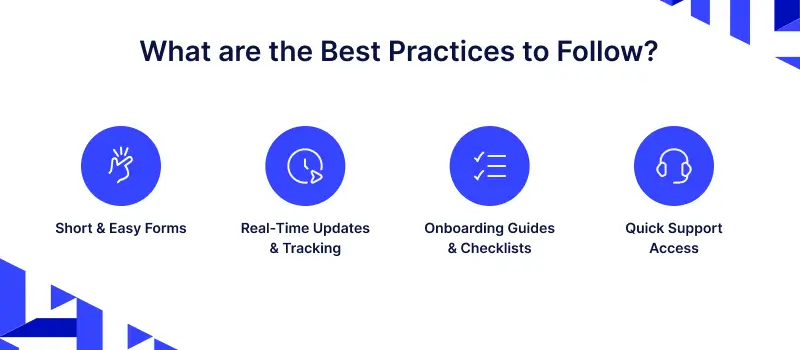
Some best practices include:
- Keep forms short and easy to complete
- Provide real-time communication and status tracking for better transparency
- Offer onboarding guides or checklists
- Enable quick support through chat or help centers
Regular optimization based on feedback ensures continuous improvement.
This helps businesses stay efficient and competitive.
Critical Onboarding Mistakes You Should Avoid
Avoid making registration processes too complicated by asking for excessive information.
This usually causes frustration and leads to abandonment.
Depending solely on manual approvals can significantly slow down onboarding speed.
Poor communication and ineffective vendor management can notably worsen the overall experience.
If you ignore these problems, it may be hard to grow and work efficiently.
Fixing these issues helps improve onboarding and keeps vendors engaged for a long time.
Why Quick Vendor Registration is Critical in Today’s Competitive Market?
Setting up vendors correctly is very important for making a great first impression on your platform.
When the process is easy, it helps vendors feel confident and encourages them to work with your business.
From a marketing point of view, getting vendors on board quickly means products become available sooner.
This helps your business grow by bringing in more active vendors and strengthening your multi-vendor e-commerce marketplace.
The Top Advantages of Using an Efficient Workflow
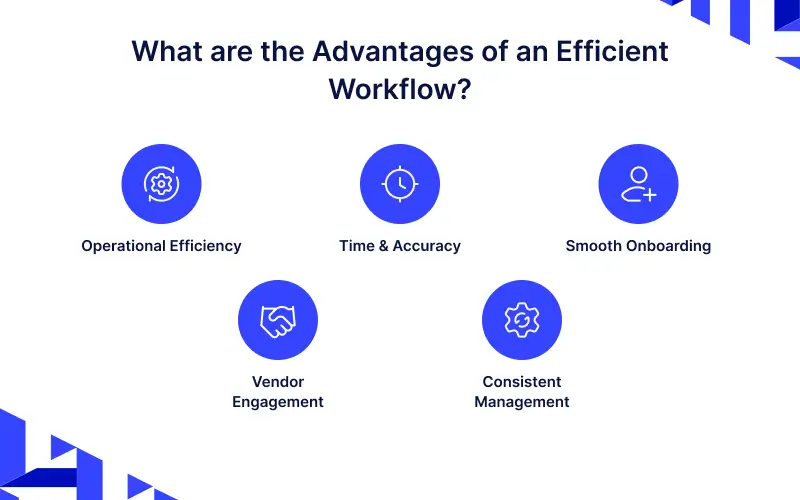
- Improves overall operations and reduces manual effort
- Saves time while maintaining accuracy
- Creates a smooth and well-structured onboarding experience
- Enhances vendor engagement and satisfaction
- Helps build long-term relationships
- Ensures consistency across all sellers through effective vendor management on the platform.
Final Thoughts
Successful vendor onboarding is vital for making a business successful and helping it grow.
A well-designed onboarding workflow ensures vendors can join quickly and build a strong foundation for a scalable multi-vendor marketplace.
A smooth vendor onboarding process works best when it is connected with the complete marketplace structure.
You can also check this marketplace vendor onboarding plan to understand how seller registration, product approval, payments, and launch steps fit together.
By refining your onboarding process, you boost both efficiency and overall platform performance.


Be the first to comment.