11 Best Open Source eCommerce Platforms on GitHub in 2026
An open source eCommerce platform gives you the full source code, so you can host and extend your store without a license fee.
GitHub stars and release activity show how healthy each project is, which makes them a useful starting point for comparing platforms.
This guide compares 11 open source eCommerce platforms on GitHub for 2026, with Bagisto as our top pick for Laravel and PHP teams.
We checked every star count, license, and release on 25 September 2026, so the numbers below reflect each project as it stands today.
Open Source eCommerce Platforms Compared (2026)
Use this table to build a quick shortlist, then read the full review of each platform further down the page.
| Platform | Language / Framework | License | GitHub Stars | Latest Release | Best For |
|---|---|---|---|---|---|
| Bagisto (Best Overall) | PHP / Laravel | MIT | 28.2K | v2.4.12 (Sep 2026) | Laravel teams, marketplaces, B2B, and large catalogs |
| Magento Open Source | PHP | OSL-3.0 | 12.2K | 2.4.9 (May 2026) | Large, complex stores with a strong development team |
| WooCommerce | PHP / WordPress | GPL-3.0 | 10.5K | 11.1.2 (Sep 2026) | WordPress websites that want to add a store |
| PrestaShop | PHP / Symfony | OSL-3.0 | 9.2K | 9.1.5 (Aug 2026) | Small and mid-size stores |
| Sylius | PHP / Symfony | MIT | 8.5K | v2.2.9 (Sep 2026) | Symfony developers building custom stores |
| Saleor | Python / Django | BSD-3-Clause | 23.4K | 3.23.36 (Sep 2026) | Headless, GraphQL-first projects |
| Spree Commerce | Ruby on Rails | BSD-3-Clause | 15.7K | v5.6.1 (Jul 2026) | Rails teams building headless or multi-vendor stores |
| Shopware | PHP / Symfony, Vue.js | MIT | 3.4K | v6.7.14.2 (Sep 2026) | Brands that want a free core with paid upgrade plans |
| OpenCart | PHP | GPL-3.0 | 8.2K | 4.1.0.4 (Aug 2026) | Small stores on a tight budget |
| nopCommerce | C# / ASP.NET Core | NPL (AGPL-3.0 with extra terms) | 10.2K | 4.90.8 (Sep 2026) | Teams using Microsoft .NET |
| Solidus | Ruby on Rails | BSD-3-Clause | 5.3K | v4.7.1 (Sep 2026) | Rails teams that need deep customization |
Star counts come from GitHub on 25 September 2026, and they will keep changing as each community grows.
How We Picked These Platforms
We compared each platform using its GitHub repository, license file, and latest release, all checked on 25 September 2026.
What we compared:
- GitHub stars and recent release activity
- License type and any usage conditions
- Programming language and framework
- Built-in features such as headless APIs, marketplace support, and AI
- Published proof that the platform can scale
Open Source Market Size and Growth
According to Precedence Research, the global open source services market reached USD 18.10 billion in 2025.
It is expected to reach about USD 85.63 billion by 2035, which is a compound annual growth rate (CAGR) of 16.81% from 2026.
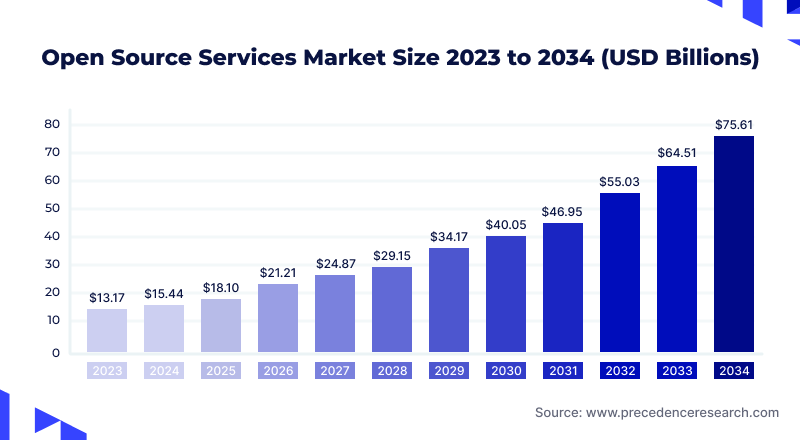
This growth shows that more businesses now prefer software they can own and change instead of closed platforms they rent.
Top 11 Open Source eCommerce Platforms on GitHub Reviewed
Each review explains who the platform suits, followed by its current GitHub numbers and the features that set it apart.
1. Bagisto: Best Laravel eCommerce Platform With Built-In AI
Bagisto is a free, MIT-licensed eCommerce platform built on Laravel, and it is the most-starred project on this list.
The latest stable release is v2.4.12 from September 2026, and version 2.5 is already available as a public beta.
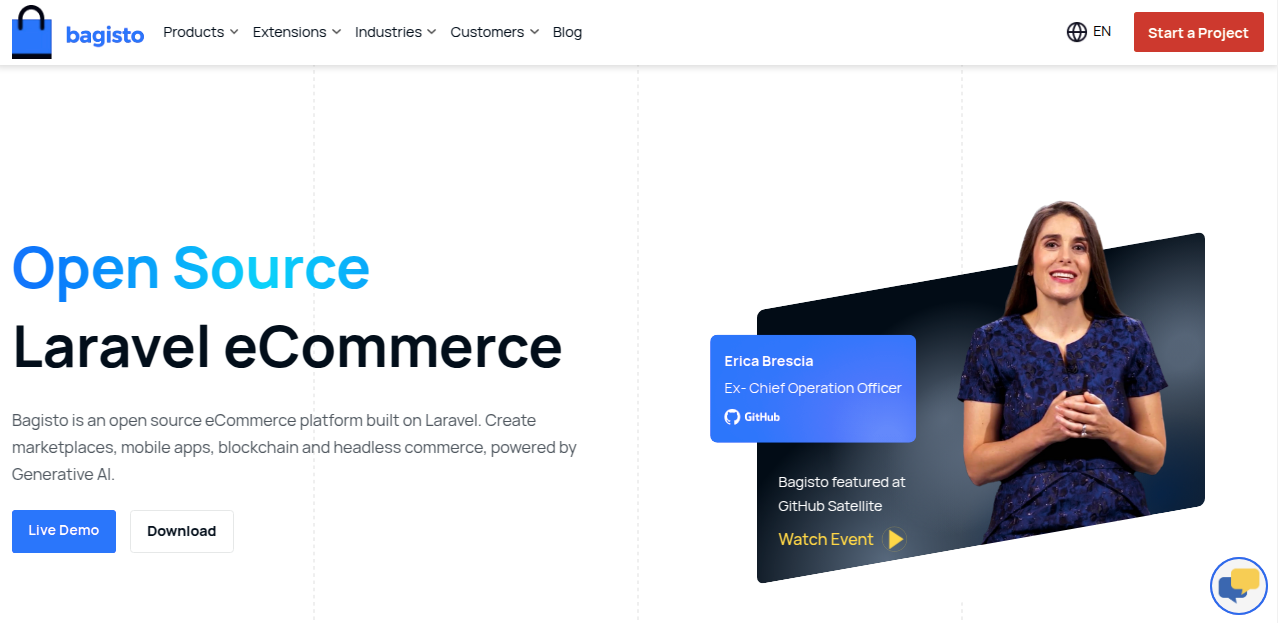
Why We Ranked Bagisto #1:
It pairs a free MIT license with built-in AI tools and proven scale, so a growing store does not have to switch platforms later.
Well-known brands trust it too, and Toyota Thailand runs its official online store on Bagisto.
Built-In AI and Agent-Ready Features
Bagisto’s AI tools ship in the free core, so you pay only for the AI model you connect and not for extra licenses.
Magic AI works with eight AI providers, including OpenAI and Gemini, plus Ollama when you want a local model.
- AI Content and Images: Magic AI drafts product text and generates product images inside the admin panel.
- AI Image Search: Shoppers upload a photo, and AI turns it into search keywords that find matching products.
- Review Translation: Shoppers can read product reviews translated into their own language.
- WebMCP Storefront Tools: WebMCP lets browser AI agents find products and open the cart or checkout, while the shopper still places the order.
- Agent Skills: Official Agent Skills teach Claude Code, Cursor, and Windsurf how to build Bagisto packages correctly.
- AI-Readable Docs: The developer docs publish llms.txt files, so AI coding tools can read the documentation directly.
Proven to Scale to 10 Million Products
Bagisto has been tested with 10 million products, so a catalog of 1 million products sits well within its proven range.
In that test on a live store, category pages loaded in about 516 ms and the home page loaded in about 561 ms.
It uses Elasticsearch or OpenSearch for product search and Redis for caching, which keeps pages fast as the catalog grows.
Key Features of Bagisto:
- Multi-Vendor Marketplace: Turn a single store into a marketplace with its own seller dashboards.
- B2B Commerce: Sell to other businesses with bulk orders and custom catalogs.
- Headless Commerce: REST and GraphQL APIs let you build any frontend or mobile app.
- Multi-Tenant SaaS: Run many independent stores from a single installation.
- POS and Mobile App: Sell in physical shops and native apps with synced orders and stock.
- Extensions: The Bagisto extensions marketplace adds payments, shipping, and third-party integrations.
- GitHub Stars: 28.2K
- Latest Release: v2.4.12 (September 2026)
- GitHub Repository: Bagisto GitHub
Hosting: Bagisto is free to self-host, or you can choose Bagisto Cloud from $25 per month.
Best for: PHP and Laravel teams building marketplaces, B2B stores, or large catalogs, who can try the live demo first.
2. Magento Open Source: Enterprise-Grade PHP eCommerce
Magento Open Source is the free edition of Magento, while Adobe Commerce is the paid version with B2B tools and Adobe support.
It suits large or complex stores, because its modular design lets developers change almost any part of the platform.
A large ecosystem of themes and Magento 2 extensions covers most features a growing store needs.
- GitHub Stars: 12.2K
- Latest Release: 2.4.9 (May 2026)
- GitHub Repository: Magento 2 GitHub

3. WooCommerce: Best for WordPress Websites
WooCommerce is a free plugin under the GPL license that turns a WordPress website into a complete online store.
It fits businesses that already run WordPress and want to start selling without moving to a new system.
A large range of themes and WooCommerce plugins lets you add payment, shipping, and marketing tools.
- GitHub Stars: 10.5K
- Latest Release: 11.1.2 (September 2026)
- GitHub Repository: WooCommerce GitHub

4. PrestaShop: Feature-Rich Store Builder for Small and Mid-Size Businesses
PrestaShop is an open source store builder under the OSL-3.0 license, written in PHP and built on Symfony in recent versions.
Its modular design and active community make it a practical choice for small and mid-size online stores.
The wide range of PrestaShop extensions covers payment gateways, shipping methods, and extra product features.
- GitHub Stars: 9.2K
- Latest Release: 9.1.5 (August 2026)
- GitHub Repository: PrestaShop GitHub

5. Sylius: Symfony Framework for Custom Commerce
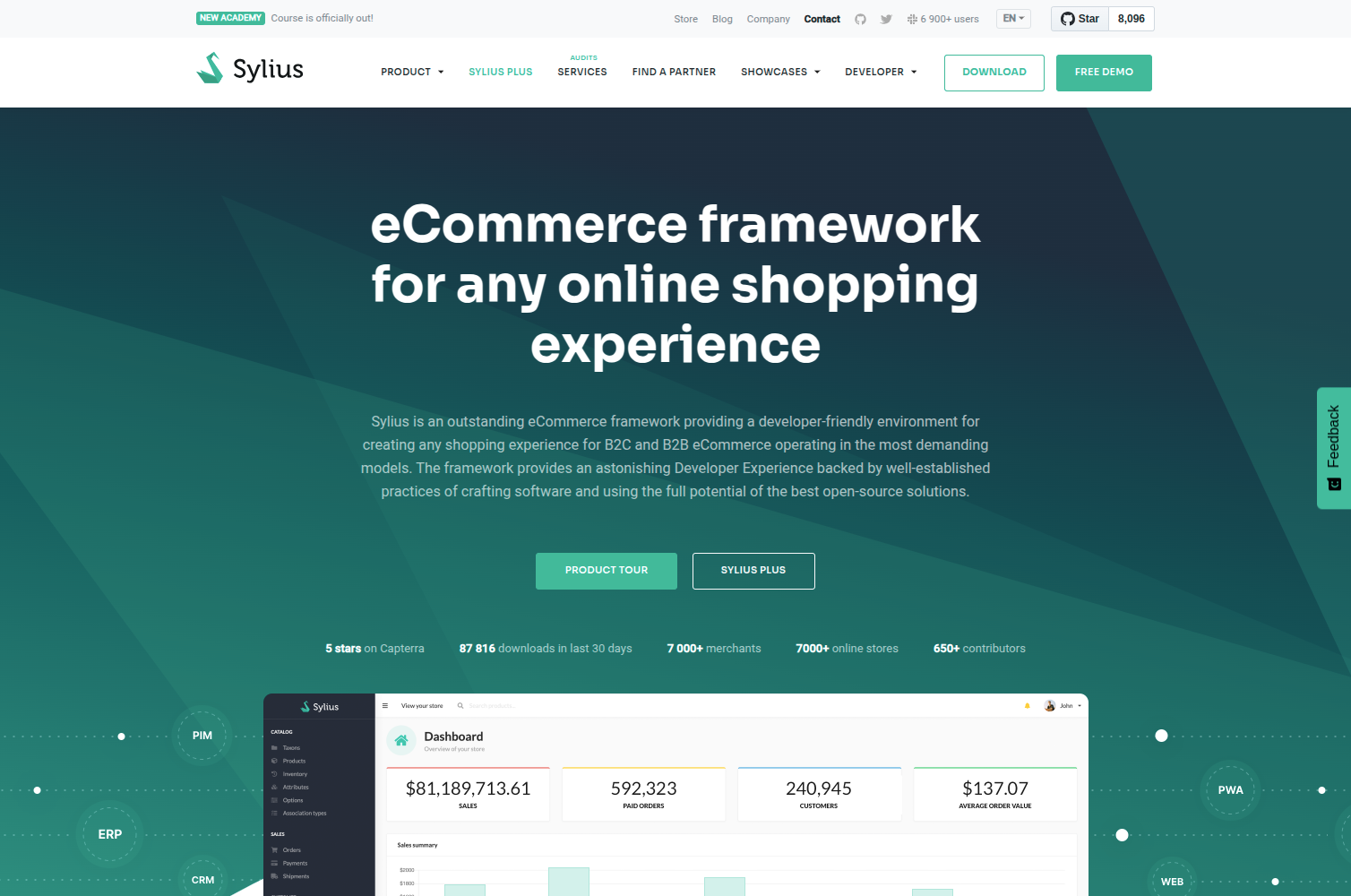
Sylius is an MIT-licensed eCommerce framework built on Symfony, aimed at developers who build custom stores.
Its decoupled design supports headless commerce, so teams can pair it with whichever frontend technology they prefer.
- GitHub Stars: 8.5K
- Latest Release: v2.2.9 (September 2026)
- GitHub Repository: Sylius GitHub
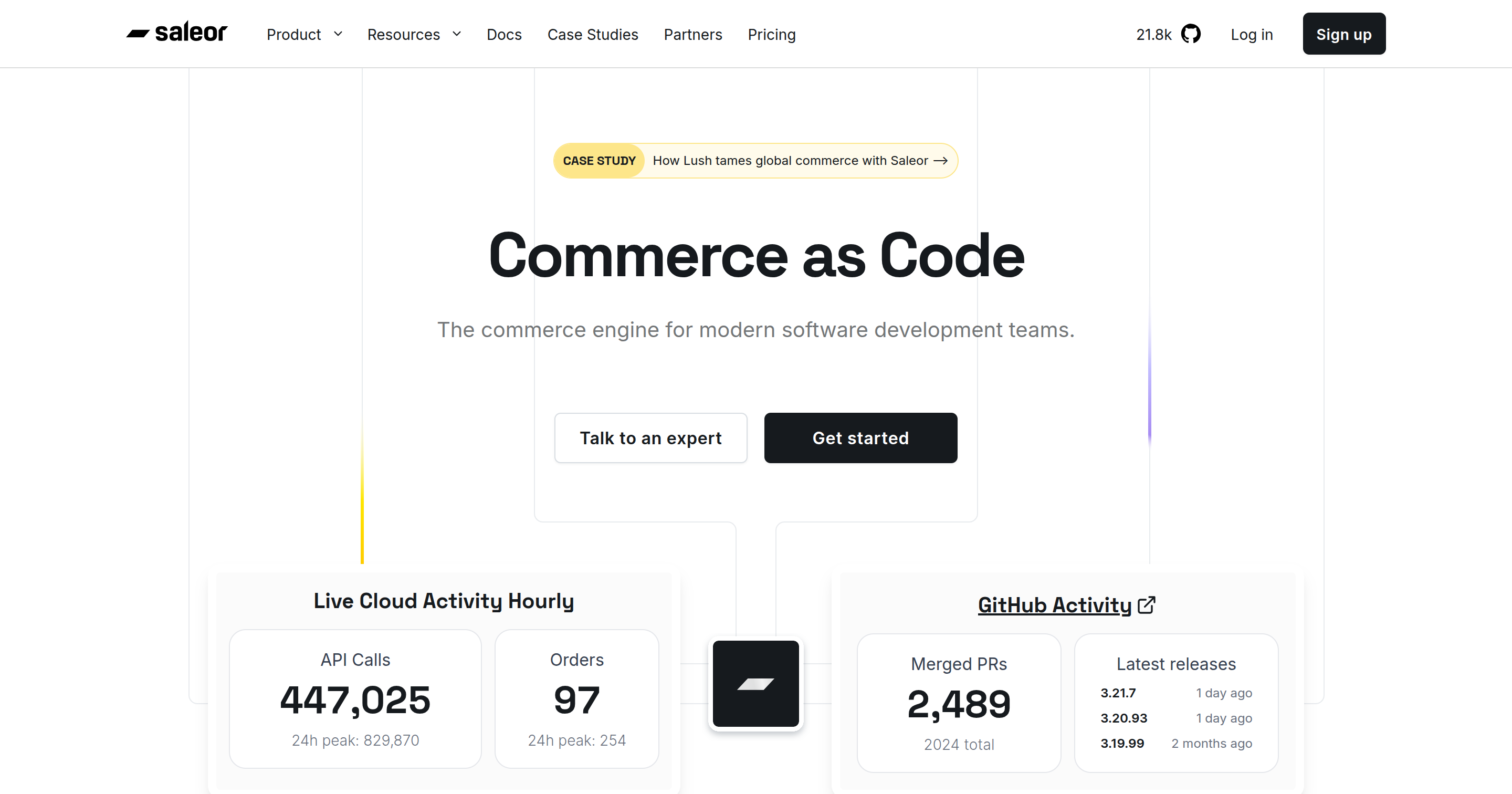
6. Saleor: GraphQL-First Headless Commerce in Python
Saleor is a headless eCommerce platform built with Python and Django, with a GraphQL API at its core.
It supports custom frontends and multiple channels, which suits brands that sell in several countries and currencies.
- GitHub Stars: 23.4K
- Latest Release: 3.23.36 (September 2026)
- GitHub Repository: Saleor GitHub
7. Spree Commerce: Ruby on Rails Platform for Headless Stores
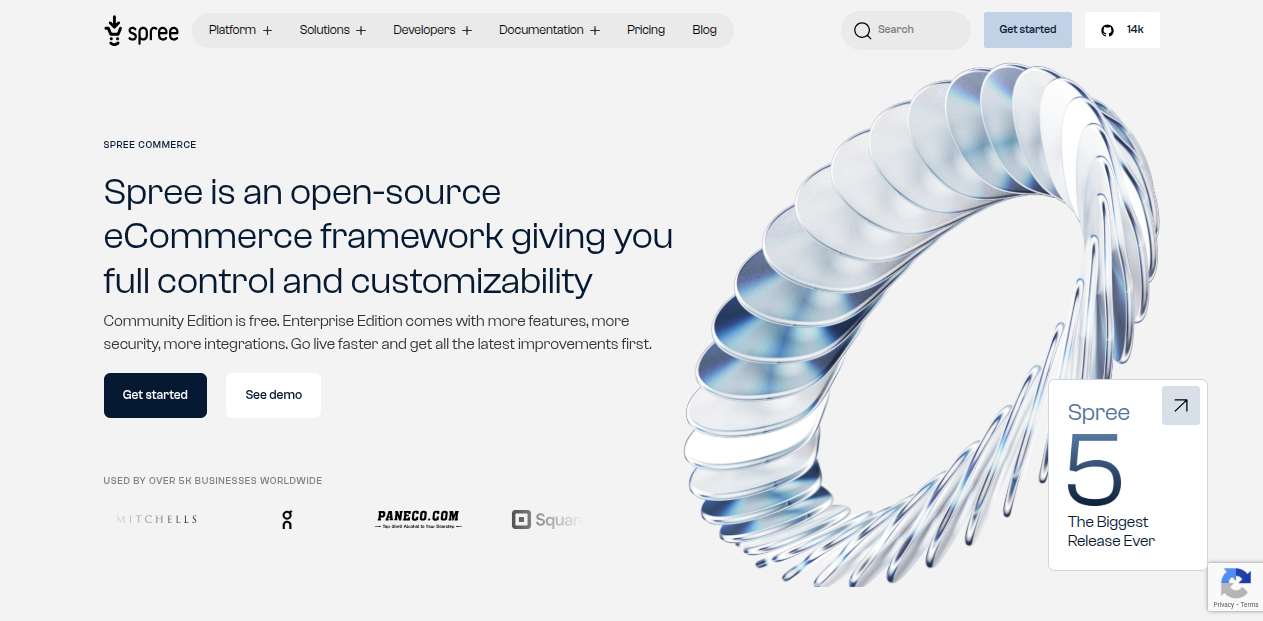
Spree Commerce is a BSD-licensed platform built with Ruby on Rails and designed around headless, API-driven stores.
Its free Community Edition covers B2B and B2C selling, while a paid Enterprise Edition adds more features and support.
- GitHub Stars: 15.7K
- Latest Release: v5.6.1 (July 2026)
- GitHub Repository: Spree Commerce GitHub
8. Shopware: Symfony and Vue.js Platform From Germany
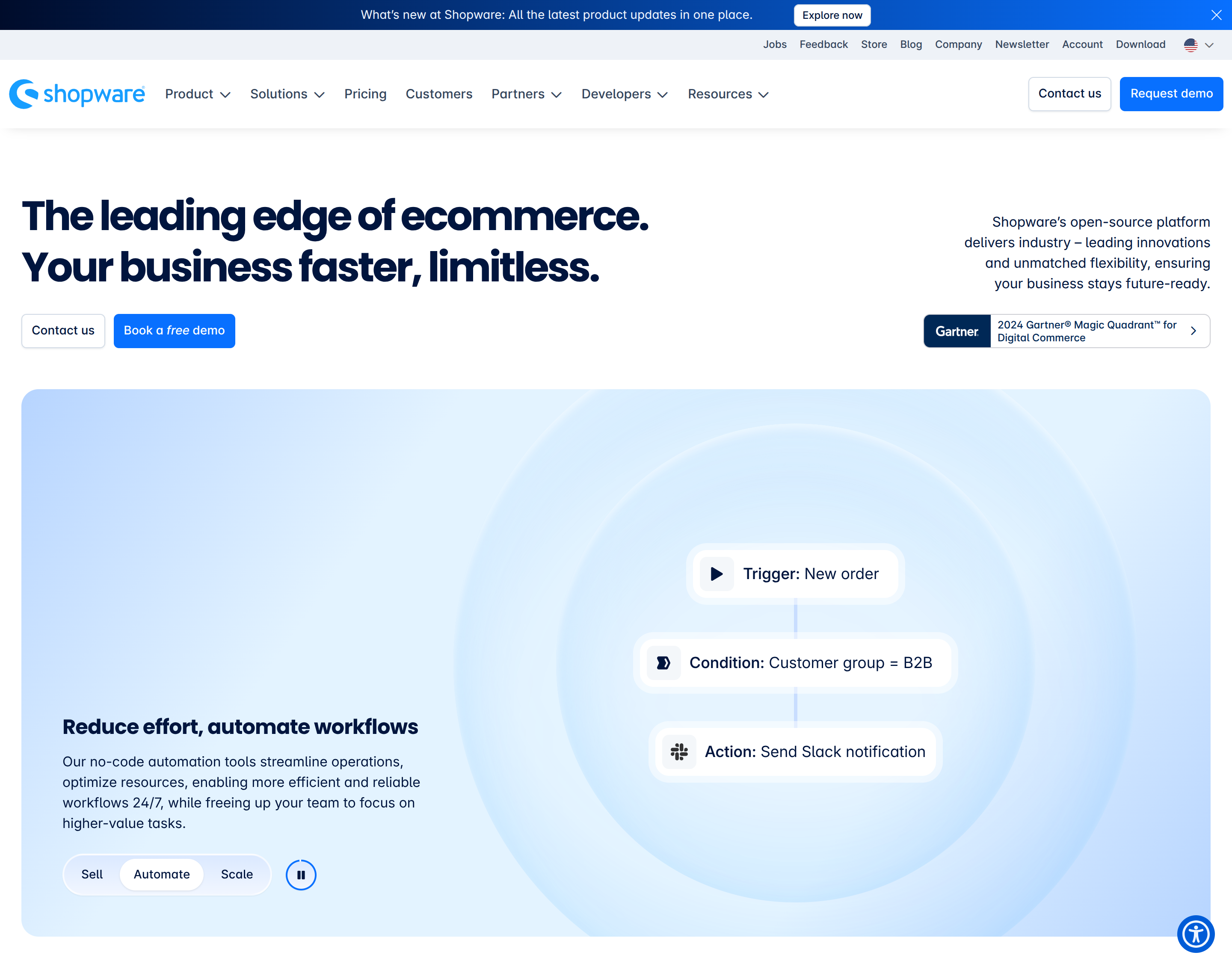
Shopware is a German eCommerce platform built on Symfony and Vue.js, with an MIT-licensed Community Edition.
It supports headless and multichannel selling, and it also offers paid plans for larger businesses.
- GitHub Stars: 3.4K
- Latest Release: v6.7.14.2 (September 2026)
- GitHub Repository: Shopware GitHub
9. OpenCart: Lightweight Platform for Small Stores
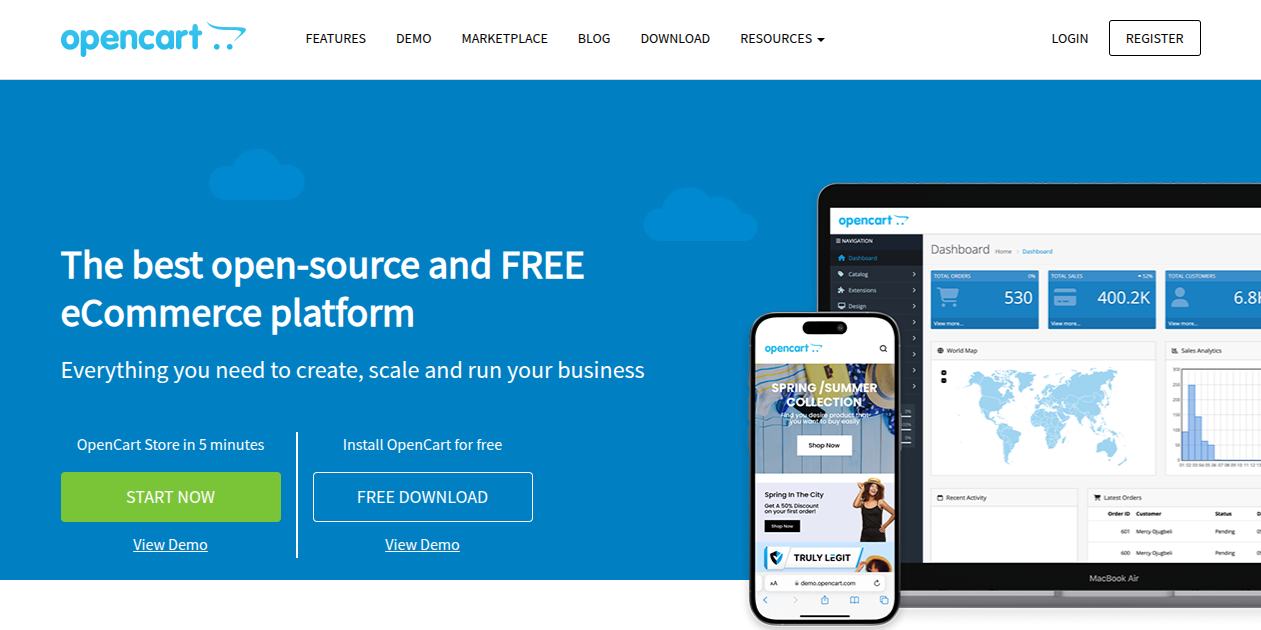
OpenCart is a lightweight PHP platform under the GPL-3.0 license, with a simple admin panel and multi-store support.
Its modest hosting needs and large extension marketplace make it a budget-friendly choice for small businesses.
- GitHub Stars: 8.2K
- Latest Release: 4.1.0.4 (August 2026)
- GitHub Repository: OpenCart GitHub
10. nopCommerce: ASP.NET Core Platform for Microsoft Teams
nopCommerce is built on ASP.NET Core and includes multi-store, multi-vendor, and SEO features out of the box.
Its license is AGPL-3.0 plus a required “powered by nopCommerce” link on every page, so read the license terms first.
- GitHub Stars: 10.2K
- Latest Release: 4.90.8 (September 2026)
- GitHub Repository: nopCommerce GitHub
11. Solidus: Customizable Ruby on Rails Commerce
Solidus is a BSD-licensed Ruby on Rails platform that began as a fork of Spree and focuses on deep customization.
It supports B2B and B2C selling with advanced promotions, which suits brands whose order flows do not fit a standard template.
- GitHub Stars: 5.3K
- Latest Release: v4.7.1 (September 2026)
- GitHub Repository: Solidus GitHub

Which Open Source eCommerce Platform Should You Choose?
The right open source eCommerce platform depends mainly on your team’s programming language and how much you plan to customize.
- Laravel or PHP teams that want AI and marketplace features: Bagisto.
- Catalogs of 1 million products or more: Bagisto, which has been tested with 10 million products.
- Large enterprise stores with a big development budget: Magento Open Source.
- Existing WordPress websites: WooCommerce.
- Small and mid-size stores: PrestaShop or OpenCart.
- Symfony developers: Sylius or Shopware.
- Python and headless GraphQL projects: Saleor.
- Ruby on Rails teams: Spree Commerce or Solidus.
- Microsoft .NET teams: nopCommerce.
Before you decide, install your top two choices locally and test them with a sample of your real product data.
Frequently Asked Questions About Open Source eCommerce Platforms
Which open source eCommerce platform has the most GitHub stars?
Among the 11 platforms in this guide, Bagisto has the most GitHub stars, with 28.2K as of September 2026.
Is Magento still open source?
Magento Open Source is still free under the OSL-3.0 license, while Adobe Commerce is the paid commercial edition.
Which open source eCommerce platform is best for Laravel?
Bagisto is our pick for Laravel, since it is built on Laravel and offers an MIT license, built-in AI tools, and marketplace support.
Can an open source eCommerce platform handle 1 million products?
Bagisto has been tested with 10 million products, and it uses Elasticsearch and Redis to keep pages fast at that size.
Do open source eCommerce platforms support AI?
Support varies by platform, and Bagisto ships Magic AI in its free core with eight AI providers, including local models.
Is WooCommerce free?
The WooCommerce plugin is free under the GPL license, but many extensions and themes in its marketplace are paid.


Be the first to comment.