Recently new ecommerce FDI policy was launched by the Government of India and is considered as the major benefactor for small retailers.
The policy directly affects the eCommerce marketplace model leaving the inventory model.
Department of Industrial Policy and Promotion (DIPP) press note no.2 (2018 series)
Problem Statement
The issue remains in India’s view at the two eCommerce models: marketplace and inventory.
- While the 100% FDI is allowed in marketplace model in which buyers directly connect with sellers, restrictions remain in inventory model in which goods remain at the warehouse of eCommerce firms from which they sell directly to customers
- The restriction is mainly to prevent India’s retail sector who don’t have enough weight to purchase large scale of products and offer big discounts.
- Consequently, companies like Amazon and Flipkart purchase bulk units from the wholesaler which in turns sell to the vendors listed on their marketplace who in turn sell to retail customers.
Existing Rules
- As per current rule, companies cannot hold ownership of goods sold on their marketplace.
- This has led companies to devise seller structures by which they comply with the current policy but also gain a few control level on their inventory.
- Because of this, companies like Amazon and Flipkart have been accused of offering a deep discount.
Proposed Changes in eCommerce FDI Policy
The Indian government has taken a huge step to tighten the new FDI policy for the eCommerce marketplace model and make it convenient for small retailers.
Major changes as observed are:
Inventory Control by Marketplace
The new rules state that if any vendor purchases more than 25% of its products from the marketplace, it will be considered controlled by that marketplace.
Such vendors will then fall under the inventory-based model, which is not eligible for direct FDI.
Equity Restrictions
The new rule prohibits marketplace operators in India from holding any equity interest in the companies or firms selling on their platform.
This rule was a major setback for companies like Amazon, which held equity in Indian retailers to expand their presence.
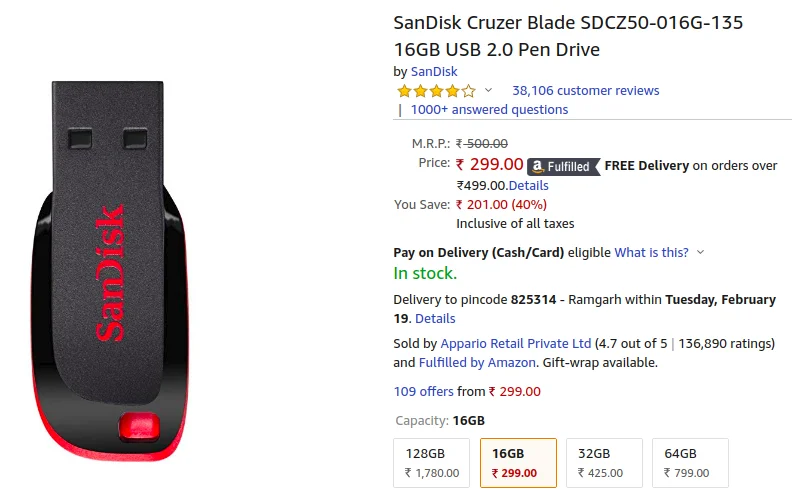

As of current Amazon has some stakes in retailers like Shopper Stop and in the parent companies of Cloudtail and Appario.
No Exclusivity
The eCommerce firms cannot urge vendors to sell products exclusively on their online store.


The vendors, however, have the choice to choose their online preferred partner.
By this, selling exclusively on the marketplace can continue, but the eCommerce firms are not allowed to use the word “Exclusive”.
Fair Service Offering to Sellers
These benefits should be equally accessible to all vendors on the platform.
Any such services being provided to one seller and not to others would be considered as unfair and discriminatory.
25% Sale Restriction
The Department of Industrial Policy and Promotion(DIPP) has clarified that there will be 25% restriction on sale done by the vendor on a particular marketplace.
This means vendors would not only be able to sell only 25% of their products in a particular marketplace.
To meet the condition, now the vendors need to enhance their production quantity and invest in expanding the inventories.
Conclusion
To sum up, the current FDI policy does little in making the eCommerce market competitive.
Marketplaces have created complex seller structures to appear compliant, but these practices still violate the spirit of the law.
The new policies as proposed may have several drawbacks on paper.
But they are necessary to implement to keep a check on circuitous structures adopted by companies.
This might somehow organize the India retail sector and give more opportunities to local and small vendors.

