Starting an online store is easier than ever. The right eCommerce hosting solution supports better performance, security, and growth.
Many businesses compare Self Hosted vs Managed Hosting before launching or growing their online store.
Self-hosted hosting gives you full control over your server.
Managed cloud hosting takes care of maintenance, updates, and infrastructure for you.

Self hosted eCommerce hosting gives you full control over your hosting environment and server settings.
You choose the hosting provider, install the eCommerce platform, and manage the server yourself.
Your team is responsible for updates, backups, security, and server maintenance.
What Is Managed eCommerce Hosting?
Managed eCommerce hosting takes care of server management for you.
The hosting provider handles updates, backups, security, and maintenance.
Most managed hosting solutions run on scalable cloud infrastructure, making it easier to launch, manage, and grow your online store.
Features of Self-Hosted vs Managed eCommerce Hosting
Compare the key features of self-hosted and managed eCommerce hosting to understand which solution best fits your business needs.

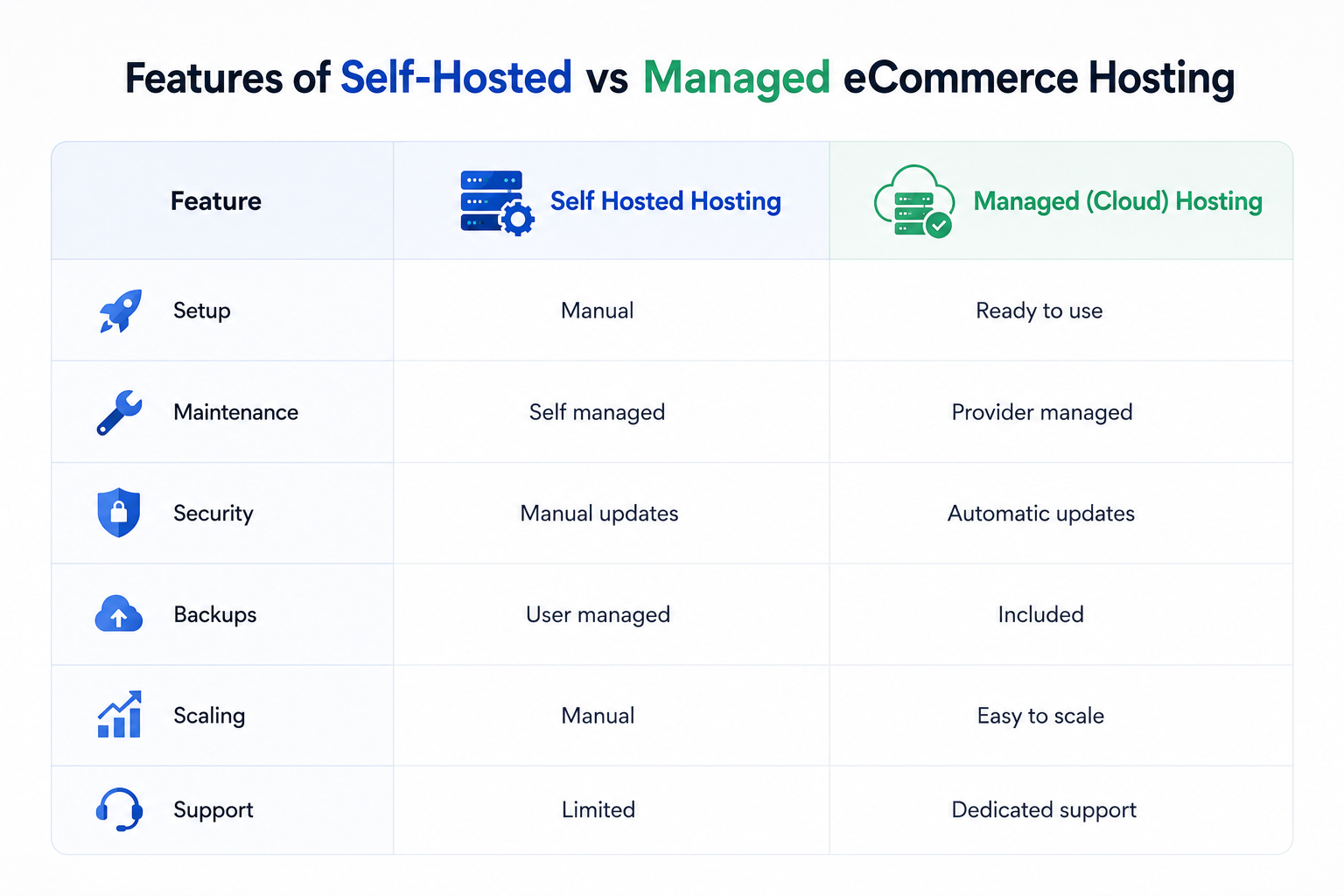
Key Differences of Self-Hosted vs Managed Hosting
Setup
Self hosted eCommerce hosting requires server configuration before your store goes live.
The setup process usually takes more time and technical effort.
Managed cloud hosting comes with a ready to use environment. You can launch your store faster without handling server setup.
Maintenance
Self-hosted hosting: Your team manages updates, backups, and server monitoring.
Managed cloud hosting: The provider handles maintenance, saving you time and effort.
Security
Self-hosted hosting: You manage Security Updates and Server Protection yourself.
Managed cloud hosting: Automatic security updates and continuous monitoring are included.
Performance and Scaling
Self-hosted hosting requires manual server upgrades as your store grows.
Managed cloud hosting: Scales resources automatically to handle traffic spikes and maintain performance.
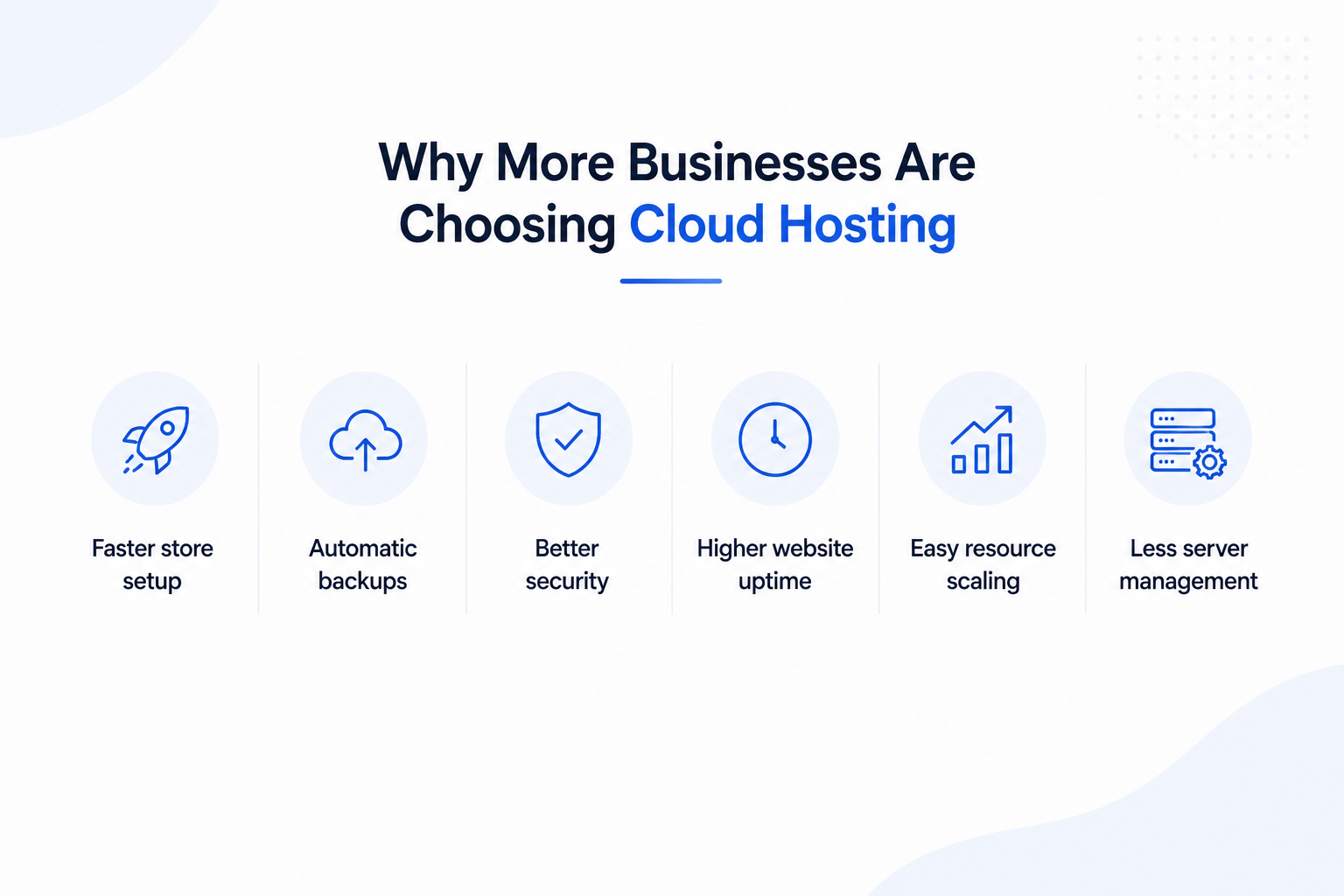
Why More Businesses Are Choosing Cloud Hosting
Managed Cloud Hosting reduces technical work, offers greater flexibility, and provides scalable resources to support your growing online store.
Key benefits include:
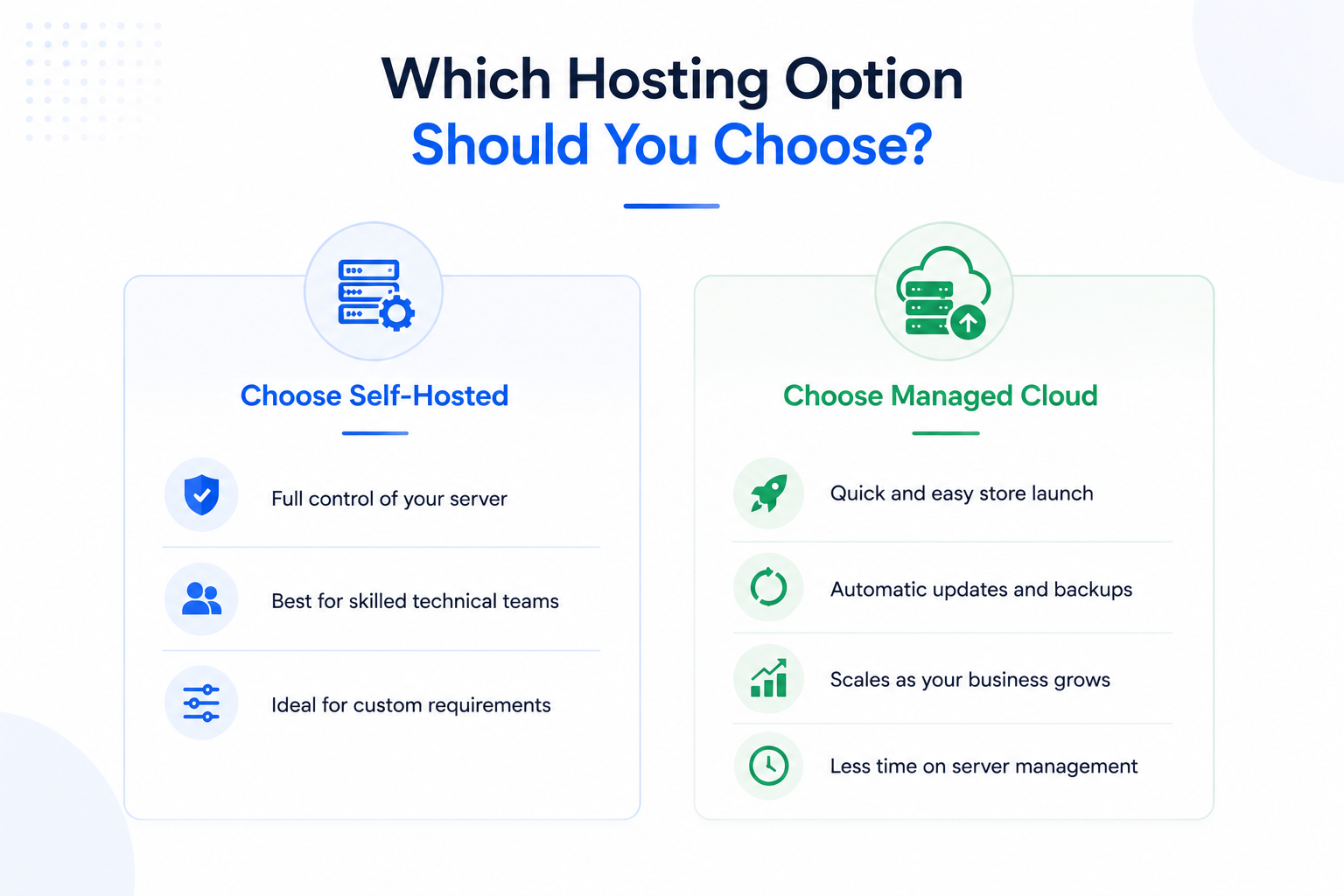
Which Hosting Option Should You Choose?
Your hosting choice should align with your business goals and the way you plan to grow your online store.
Self hosted hosting offers greater control, while managed cloud hosting provides convenience with less maintenance.
Consider your technical resources, budget, and future growth before making a decision.
The right hosting solution will support better performance, security, and long term scalability.
How Bagisto Supports Cloud Hosting
Bagisto offers managed cloud hosting for Bagisto stores.
It comes with a ready-to-use environment. You can launch your store without setting up servers.
The platform manages updates, backups, and server maintenance.
Its cloud infrastructure scales as your business grows. This lets you focus on selling instead of managing servers.
Final Thoughts
Both self hosted and managed eCommerce hosting have their own advantages.
The right choice depends on your business goals, technical expertise, and long term growth plans.
If you want complete control over your hosting environment, self-hosted hosting is a good option.
If you prefer faster setup, easier Maintenance and Reliable Support, managed cloud hosting is the better choice.
It offers a hassle-free solution for many businesses in 2026.

