Global marketplaces today handle customer data from many countries and regions.
This makes privacy management a daily task for store owners, not just a legal formality.
As businesses expand internationally, they must follow strict data protection rules and respond quickly to customer data requests.
That is where global marketplaces maintain strong eCommerce Marketplace GDPR compliance by using clear privacy workflows.
These systems reduce risk, save time, and help businesses build trust with customers across markets.


Understanding GDPR and Its Role in Data Privacy
GDPR (General Data Protection Regulation) is a data privacy law that protects personal user data.
It explains how companies must collect, store, and use data in a safe way.
For marketplaces, GDPR is important because it keeps user data secure and builds trust.
Platforms like Bagisto offer GDPR tools that help manage data safely and follow global privacy rules.
Importance of GDPR Compliance for Global Marketplaces
Marketplaces collect user data from many countries, including names, emails, and addresses.
This data must be handled with care, as bad handling can create legal problems.
If a multi vendor marketplace breaks GDPR rules, it may face fines and lose access to some markets.
Even small mistakes can hurt brand trust and increase compliance risks.
Strong privacy systems help avoid these issues and make users feel safe.
When users trust a platform, they share data more willingly, which fosters business growth.
What User Data Do Marketplaces Collect?
Most marketplaces collect customer information during account creation and checkout.
This data helps process orders and provide customer support.
However, collecting unnecessary data can increase privacy risks.
Businesses should clearly understand what data they store and how it is used.
Common data includes:
- Name and contact details
- Billing and shipping methods
- Order history
- Login activity
- Consent and preferences
Maintaining a policy of data minimization is always a safer approach.
Managing Customer Data Requests in Daily Operations
Users want full control over their personal data, and they may request updates or deletion whenever needed.
Manual handling of these requests is slow, time-consuming, and increases the workload for support teams.
A centralized system makes processing faster and more efficient
With automation, businesses can reduce mistakes, save time, and handle user requests in a more reliable way.
Features That Help Marketplaces Stay GDPR Compliant
Modern marketplace platforms include built-in privacy tools to manage customer and seller data safely.
These features reduce manual work and support smooth compliance operations.
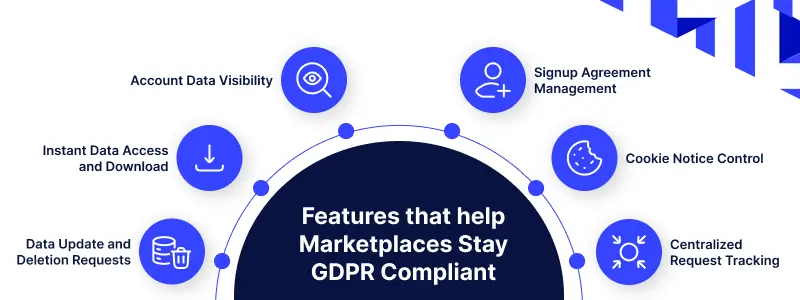
- Data Update and Deletion Requests: Users can update or delete their data anytime.
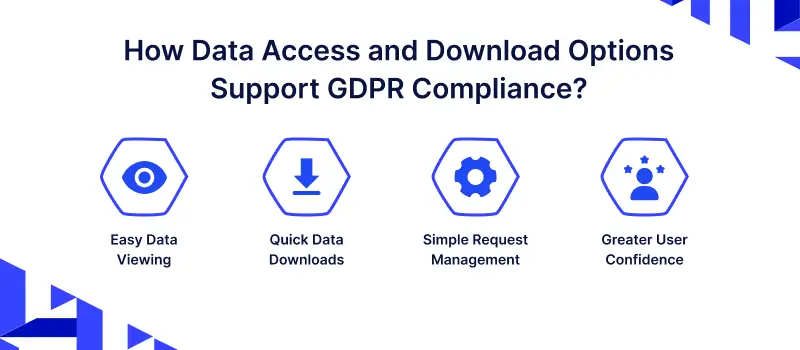
- Instant Data Access and Download: Users can easily download their data.
- Account Data Visibility: Users can view all stored data in one place.
- Signup Agreement Management: The Privacy Policy is displayed during signup to ensure clear consent.
- Cookie Notice Control: Cookie banners properly collect user consent.
- Centralized Request Tracking: All requests are stored in one dashboard.
- Request Status Updates: Admins can easily track request progress.

Challenges in GDPR Compliance for Global Marketplaces
As marketplaces grow, managing customer data becomes more complex.
Businesses must handle large volumes of information while meeting strict privacy regulations across different regions.
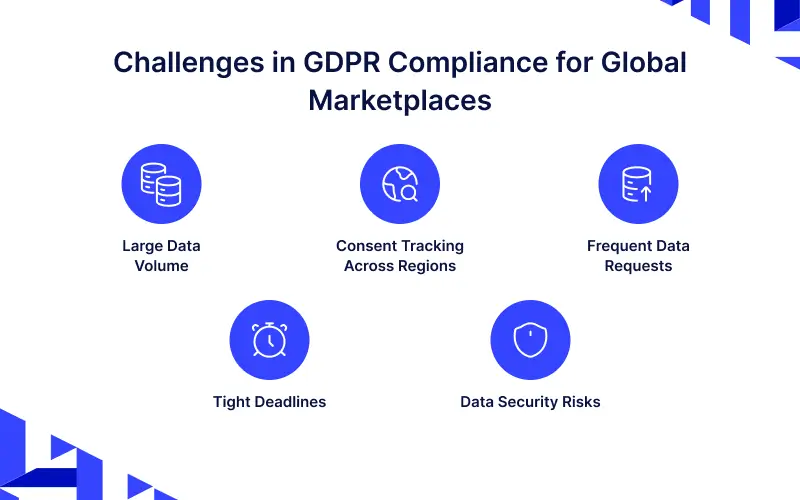
Common challenges include:
- Large data volume
- Consent tracking across regions
- Frequent data requests
- Tight deadlines
- Data Security Risks