Launching a multi vendor marketplace takes careful planning. It also needs strong control. Managing many sellers, products, and orders gets harder as you grow.
A good system helps you manage vendors from one dashboard. It handles listings, orders, and daily tasks smoothly.
Using a scalable platform keeps performance high. This builds customer trust and helps your business grow.

Why Multi-Seller Is Better Than Single-Seller?
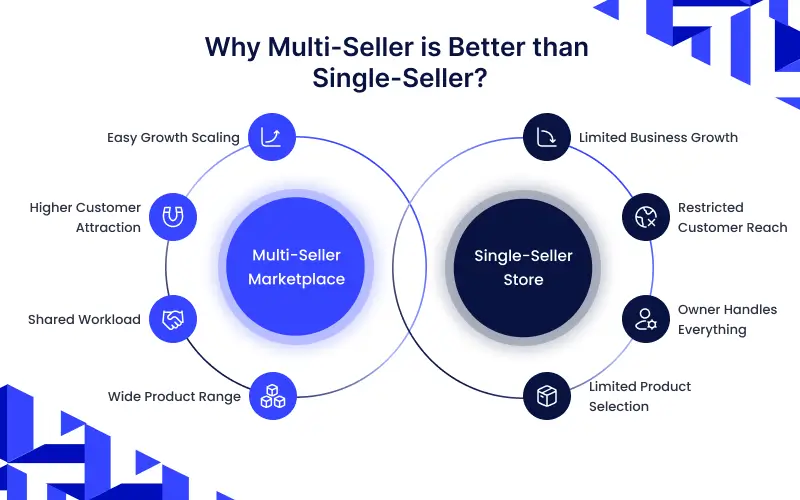
| Multi-Seller Marketplace | Single-Seller Store |
|---|---|
| Growth is easy as more sellers join. | Growth depends only on one business. |
| Sellers manage their own stock. | One business handles all stock. |
| Sellers share the workload. | The owner does all the work. |
| Offers many products from different sellers. | Selection is limited to one business. |
| More products attract more customers. | Fewer products can limit growth. |

Maintaining Balance Between Admin and Sellers
A good balance between the admin and sellers is vital. Strong admin management helps monitor seller activity. Everyone must follow the platform rules.
Poor quality or slow updates hurt customer trust. Checking things regularly helps keep standards high.
Clear steps and effective buyer seller communication solve issues fast. This keeps the marketplace stable and protects its reputation.
Using Laravel for Marketplace Development
Laravel provides a safe and flexible way to manage sellers. It handles vendor tasks, order tracking, and payments.
This system helps you build a full marketplace. It also uses automation to make work easier.
A strong backend keeps the site stable as it grows. This lets you scale up without any big problems.
Key Features of a Multi-Vendor Marketplace
Here are the top features of multi-vendor marketplace.
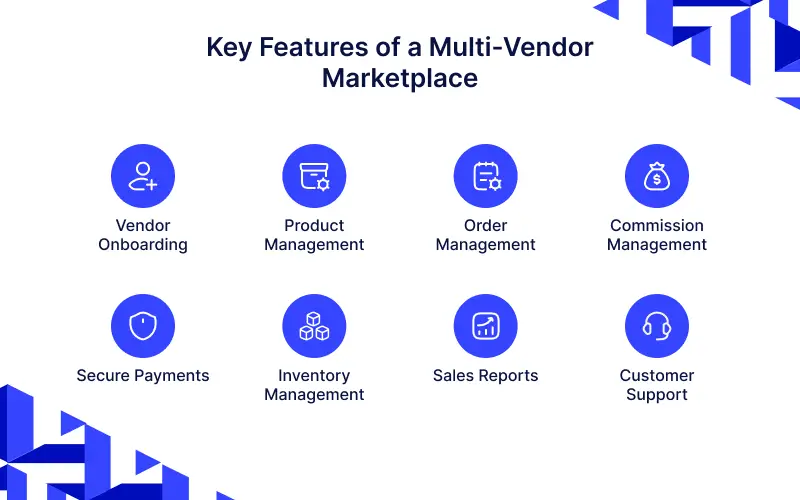
- Vendor Onboarding: Sellers can sign up and start selling fast.
- Product Management: Sellers can add and update products easily.
- Order Management: Track orders from start to finish and handle returns.
- Commission Management: Calculate earnings and fees automatically.
- Secure Payments: Ensure safe trades with many payment options.
- Inventory Management: Update stock in real-time to avoid errors.
- Sales Reports: Get clear data to make better choices.
- Customer Support: Answer buyer questions and fix issues quickly.
Common Challenges in Multi-Vendor Marketplaces
Running a large marketplace has some hurdles. Keeping product quality the same across all sellers is hard.
High order numbers can also slow down the system. Without a plan, delays can happen.
Clear rules and automated steps help fix these issues. This keeps the site running well and customers happy.
Best Practices for Building a Scalable Multi-Vendor Marketplace
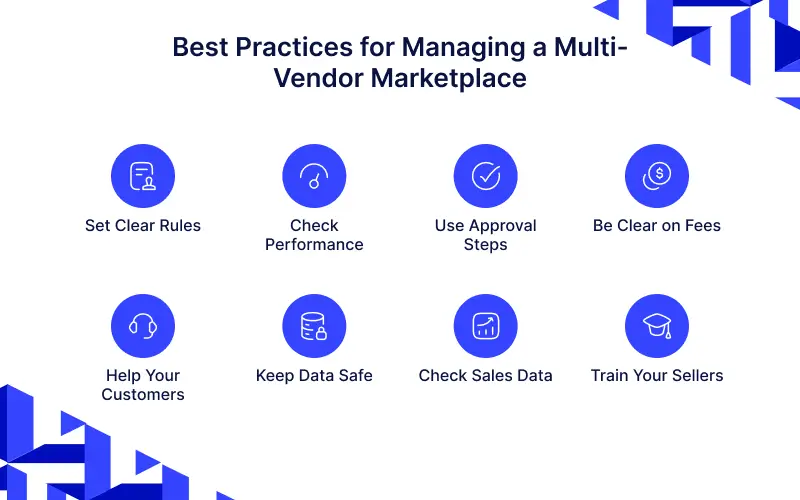
- Set Clear Rules: Give sellers rules for listings, prices, and shipping.
- Check Performance: Watch seller ratings and delivery times.
- Use Approval Steps: Check products before they go live.
- Be Clear on Fees: Tell sellers exactly how much they pay.
- Help Your Customers: Fix problems fast to keep buyers happy.
- Keep Data Safe: Use secure tools to protect all information.
- Check Sales Data: Look at reports to find ways to improve.
- Train Your Sellers: Give tips to help sellers do a better job.
Final Thoughts
Building a marketplace needs a simple and scalable plan. Good management and the right tools lead to success.
Focus on performance to grow with confidence. A well-run marketplace can handle more demand with ease.
By maintaining a balance between admin control and seller freedom, you can ensure quality and consistency.
With the right approach, you can create a high-performing platform that attracts more sellers and supports long-term business success.