Bagisto ERP Integration connects your online store with your ERP system.
Your storefront handles the customer side, while the ERP takes care of stock, purchasing, invoicing, and returns behind the scenes.
As an online business grows, these moving parts get harder to coordinate on their own.
Warehouses, invoices, and returns all start pulling your team in different directions. Once connected, Bagisto and your ERP share data continuously.
Stock counts stay correct across every sales channel, so your team spends less time double checking numbers.
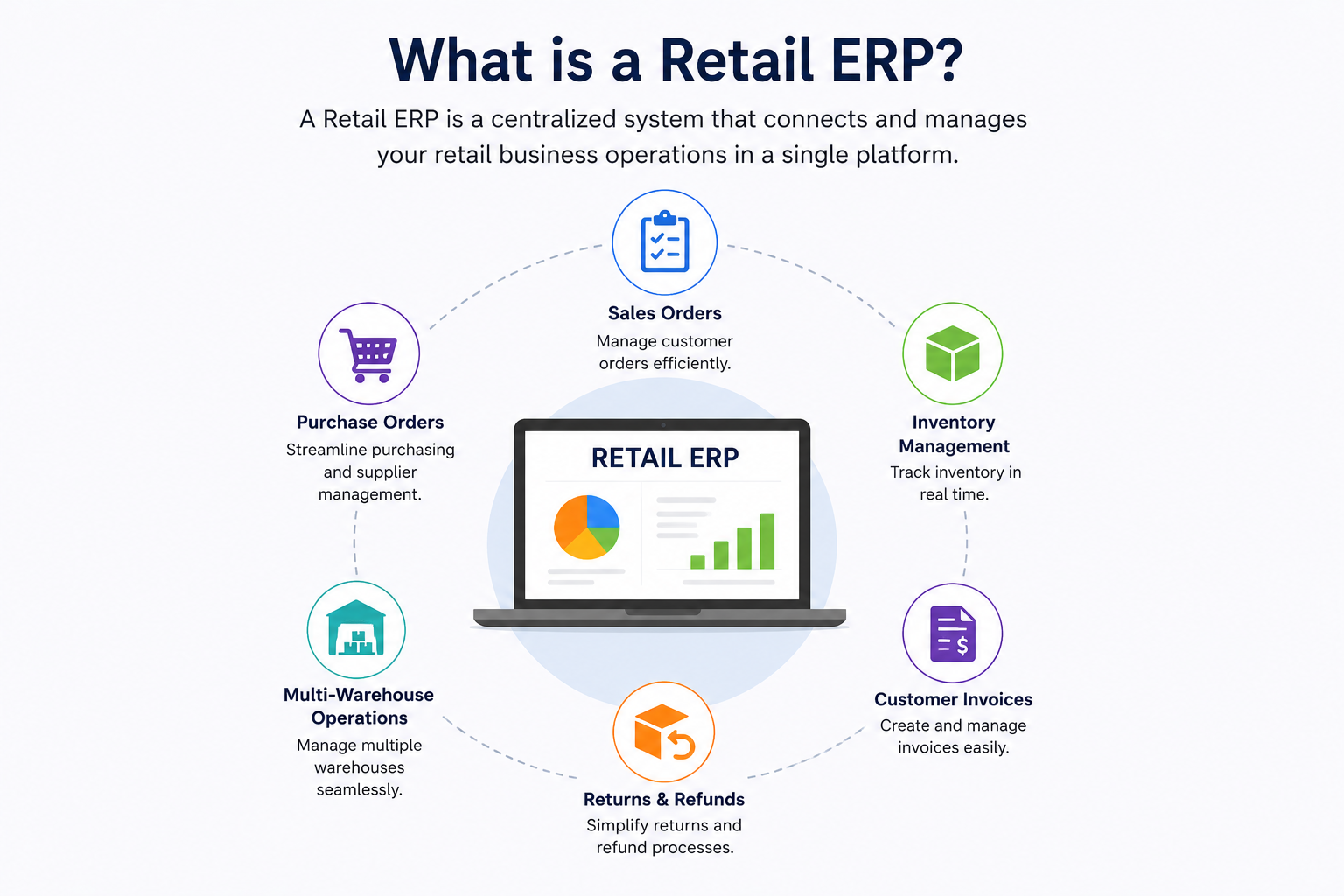
What is a Retail ERP?
A Retail ERP is software built to manage a store’s moving parts from one place.
Instead of juggling separate tools for sales, stock, and billing, everything lives together.
This gives you a full view of your supply chain in one screen. Your team can spot problems early and act on them faster.
A Retail ERP typically manages:
- Sales orders
- Inventory
- Purchase orders
- Customer invoices
- Returns and refunds
- Multiple warehouses

Why Retail Businesses Need an ERP
Growth exposes the cracks in a store’s operations fairly quickly. Stock counts drift, orders slow down, and warehouses become harder to coordinate by hand.
Left unchecked, these problems compound. A missed reorder point turns into a stockout, and a stockout turns into a lost customer.
A Retail ERP closes these gaps by combining sales, stock, buying, and billing into a single system. Here’s what that unlocks in practice:
- Run all operations from a single connected system instead of switching tools
- Catch reorder points early, before stock actually runs dry
- Coordinate multiple warehouses without relying on spreadsheets or guesswork
- Cut down on manual entry, since data moves between systems on its own
- Give customers a better experience, backed by stock levels they can trust
What You Gain by Connecting Bagisto to an ERP
The value isn’t just having an ERP. It’s having one that talks to your storefront without a human relaying the message.
That connection is what turns a Retail ERP from a back office tool into something that actively shapes the shopping experience. A few concrete outcomes:
- Purchasing that triggers itself once stock dips, instead of waiting on someone to notice
- Warehouse decisions, like which location ships an order, made automatically based on proximity
- Financial records that stay current the moment a payment clears
- Forecasting built on live sales data rather than last month’s spreadsheet
- Fewer support tickets from customers chasing order or stock status
Key Features of Bagisto ERP Integration
1. Sales Order Management
The moment a customer checks out on Bagisto, that order lands in the ERP. Nobody has to copy the data across by hand.
From there, the ERP manage the orders, checking stock, updating statuses, and pushing shipment and invoice details back to Bagisto as things move.
This feature covers:
- Automatic sales order syncing
- Customer information syncing
- Real time inventory checks
- Order status updates
- Shipment and invoice syncing
- Orders pulled in from multiple channels
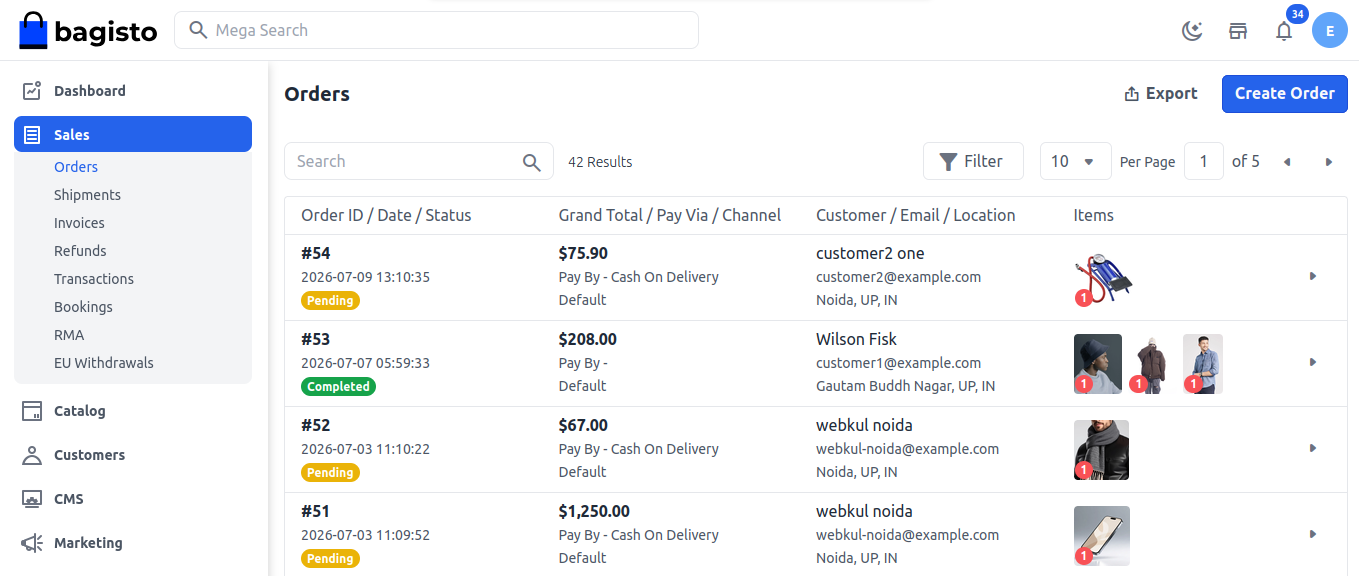

Example: A customer orders an office chair and a study table. Bagisto sends the order through, and the ERP reserves the stock needed to fill it.
Warehouse staff pick, pack, and ship the items. By the time the package leaves the building, the order status on Bagisto already matches reality.
2. Purchase Order Management
Keeping stock on hand means knowing when to reorder before it’s too late, not after a customer complains.
The ERP tracks stock levels around the clock in the background.
When something hits its reorder point, a purchase request gets created without waiting for someone to notice.
Vendors, approvals, and quotes are also managed from the same platform.
This feature covers:
- Automatic purchase requests
- Purchase order creation
- Vendor management
- Supplier quote comparison
- Goods receipt management
- Inventory replenishment
- Purchase tracking
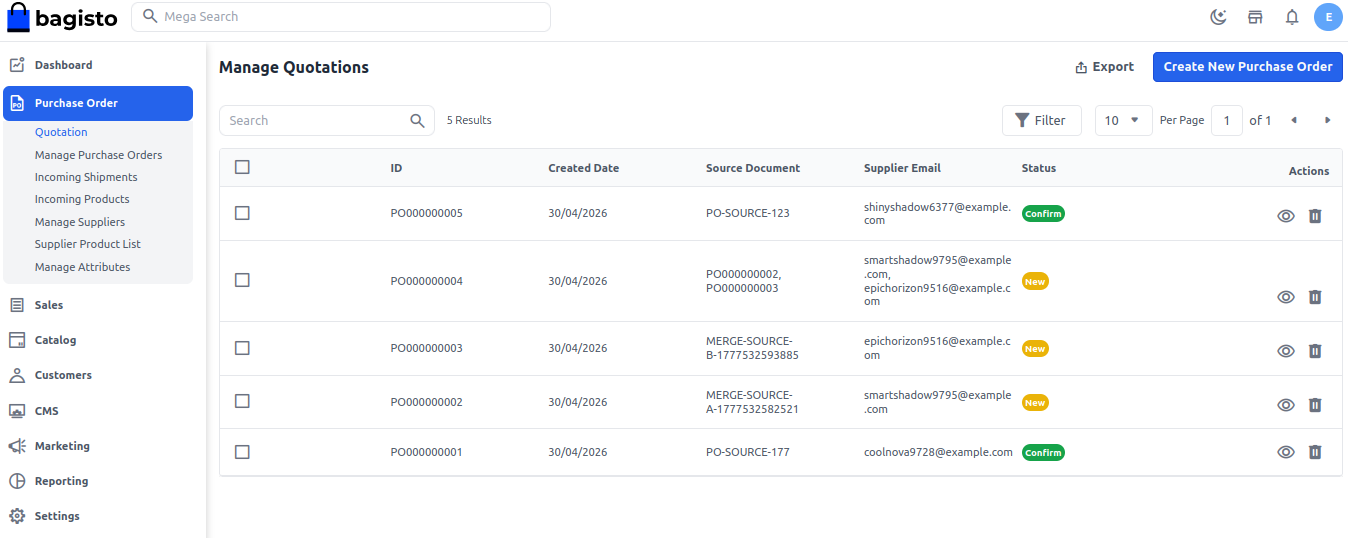

Example: The last five keyboards sell out on Bagisto. The ERP flags the drop and drafts a purchase request before anyone has to ask.
Once the team approves it, the vendor ships new units to the warehouse. The moment they’re received, the count on Bagisto reflects it too.
3. Invoice Management
Invoicing runs quietly once Bagisto and the ERP are linked. When an order ships, the ERP builds the invoice using data it already has on file.
There’s no re entering line items or chasing down order numbers. The finished invoice syncs back to Bagisto, keeping both systems on the same page.
This feature covers:
- Automatic invoice creation
- Tax calculations
- Payment tracking
- Credit note management
- Accounting system integration
- Invoice status syncing
- Financial report generation
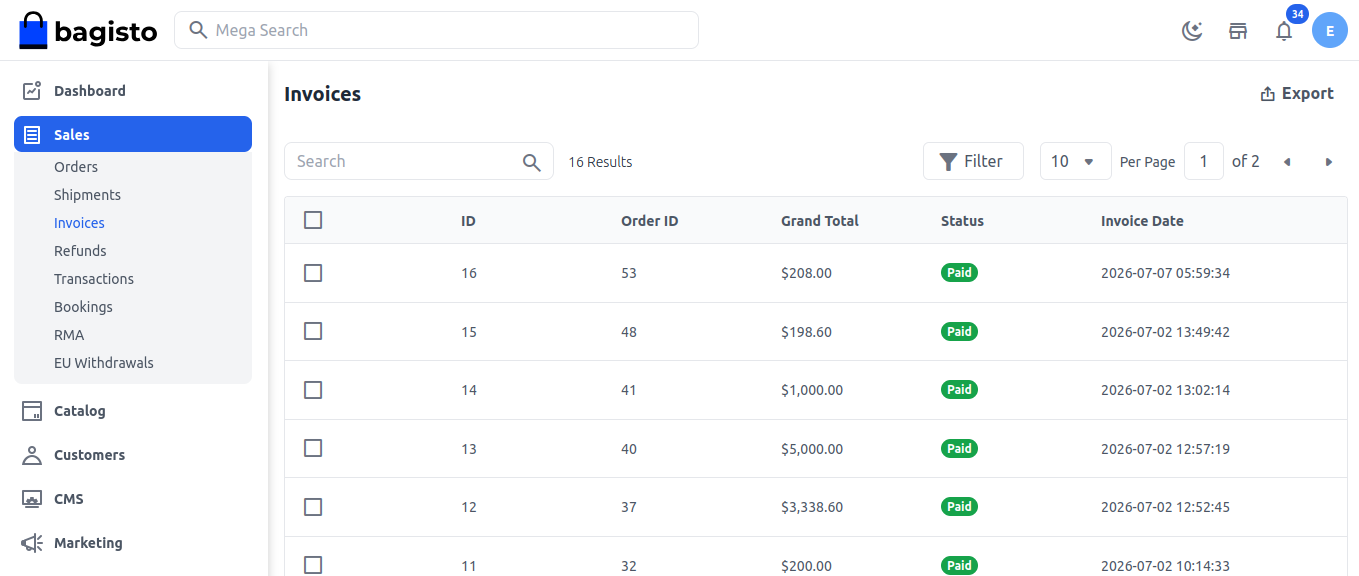
Example: A customer buys a laptop and pays for it. The ERP logs the payment and flips the invoice status to Paid.
That status change shows up on Bagisto without anyone touching a keyboard. Your finance team gets clean records without reconciling two systems by hand.
4. Backorder Management
Being out of stock doesn’t have to mean turning a sale away. The ERP can still accept orders for items that are temporarily unavailable.
It keeps track of what’s pending and what’s inbound, then lets customers know when to expect their delivery.
Priority goes to whichever backorder was placed first.
This feature covers:
- Orders accepted on out of stock items
- Incoming stock reserved automatically
- Customer notifications on availability
- Prioritized backorder fulfillment
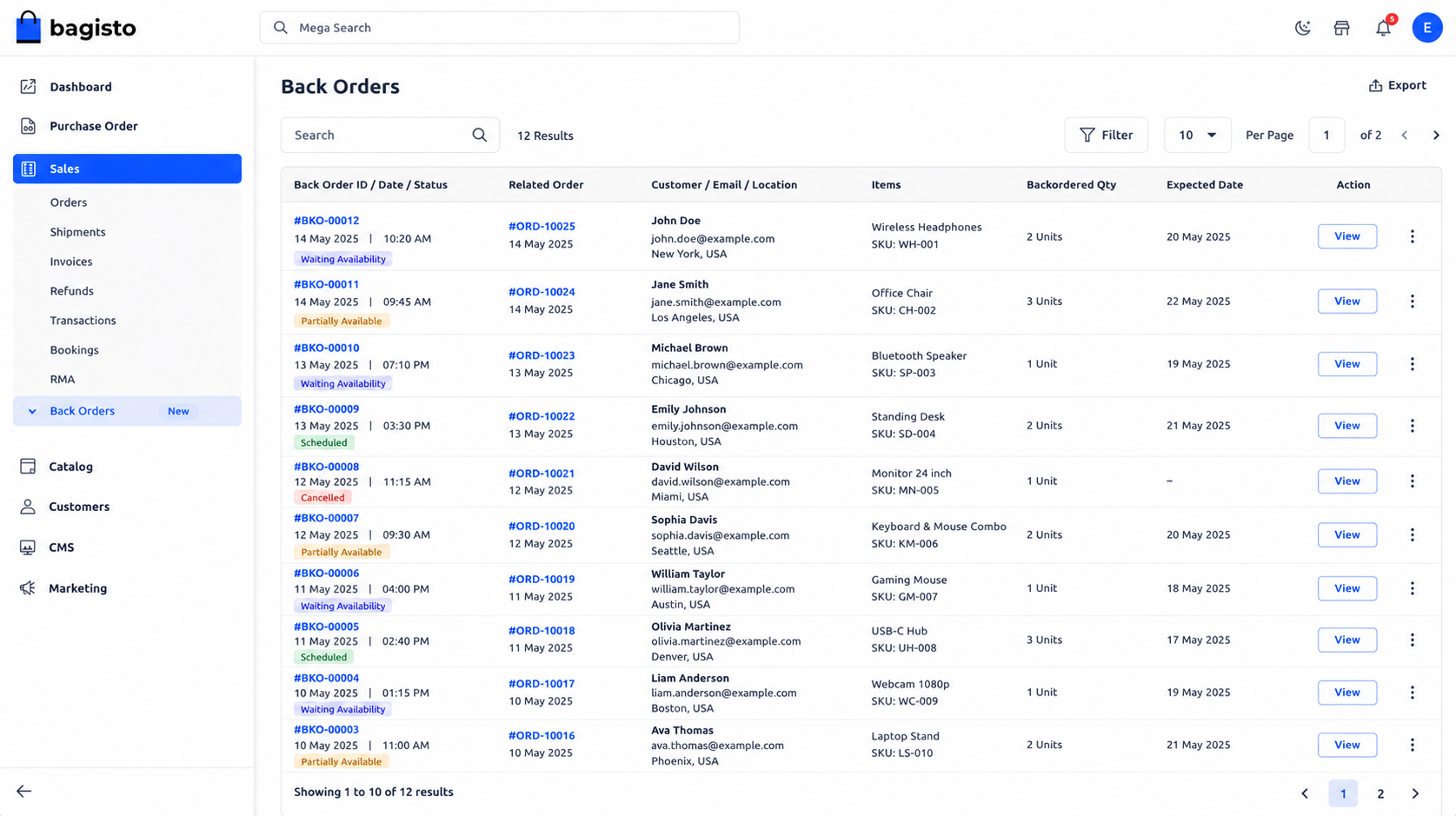

Example: A customer orders ten office chairs, but only six are sitting in the warehouse. The ERP ships those six out right away.
The remaining four become a backorder, tied to the next shipment from the vendor. Once that stock lands, the second delivery goes out and the order closes.
5. Inventory Management
Retail runs on trustworthy numbers. If your stock count is off, you either turn away buyers you could have served or promise stock you don’t actually have.
With Bagisto and the ERP synced, a sale, a return, or a manual adjustment shows up on both sides at once. Nobody’s working off stale data.
Businesses can also manage:
- Visibility across multiple warehouses
- Manual stock adjustments when needed
- Stock reservations and lot tracking
- Inventory valuation and internal transfers
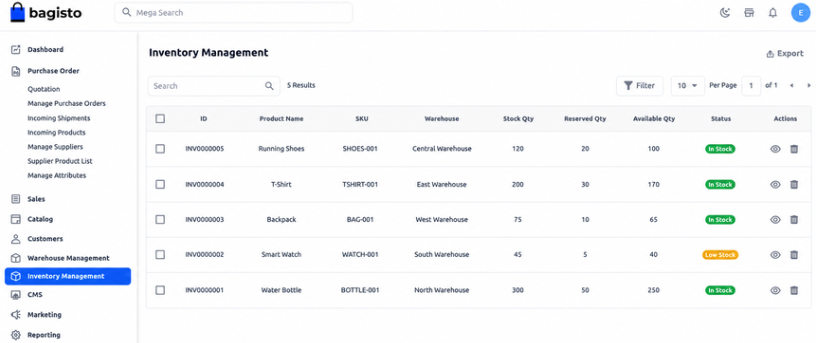

Example: A shipment of one hundred phones lands at the warehouse. It moves through receiving, a quality check, and storage before the count updates.
From that point, the new stock is visible on Bagisto. Customers browsing the site can add it to their cart right then.
6. Warehouse Management
A store can have perfect inventory data and still ship orders slowly if the warehouse itself is disorganized.
Fulfillment speed comes down to how efficiently products physically move. ERP tools go past basic stock tracking here.
They shape how staff navigate the floor, from where a product sits to how it gets picked and packed.
This feature covers:
- Zone and shelf management
- Barcode scanning for accuracy
- Product putaway and storage
- Stock and cycle counting
- Multiple inventory routing options
Fewer picking errors and a more organized floor plan follow naturally from this. As order volume grows, the same setup scales without a full process overhaul.
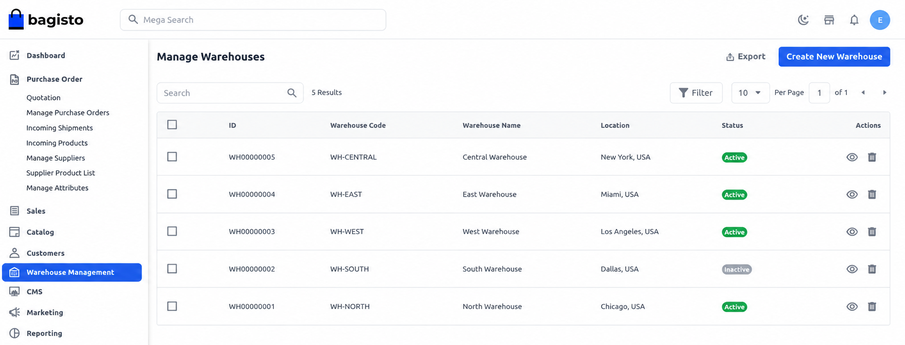

Example: A business runs warehouses in both Delhi and Mumbai. A customer in Delhi places an order, and the ERP checks stock at both locations.
Since Delhi is closer, that’s where the order gets picked from.
Only the Delhi warehouse’s stock count moves, keeping Mumbai’s inventory untouched and accurate.
Top ERP Platforms for Bagisto Integration
Choosing the right ERP depends on your business needs. Think about your business size, budget, work process, and future growth plans.
Bagisto works with many top ERP systems. Some popular choices are:
- Odoo
- ERPNext
- Aureus ERP
Each ERP has its own set of features. They help manage stock, buying, warehouses, accounting, manufacturing, and customer service.
Pick the ERP that fits your retail operations best. The right integration boosts efficiency and supports long term growth.
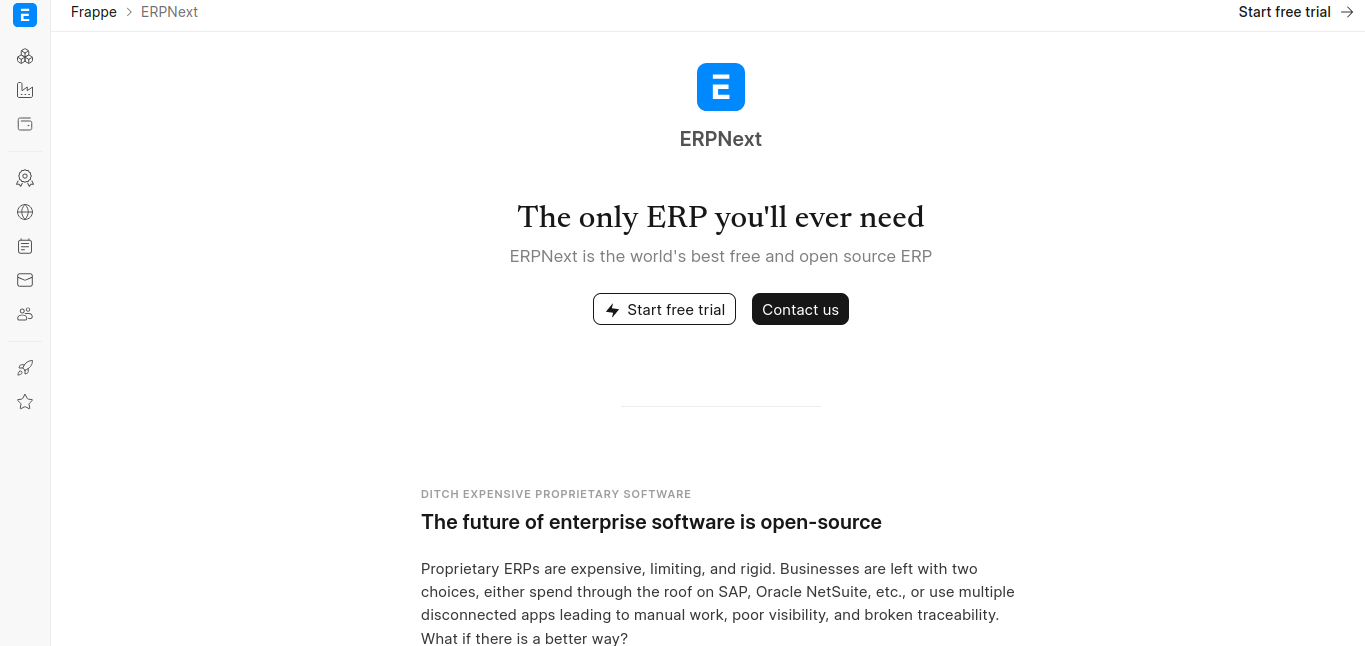
1. ERPNext
ERPNext is a free, open source ERP system. It helps businesses manage daily work using one tool.
You can manage sales, stock, buying, and money in one place. This saves time, cuts manual work, and keeps business data current.
Key Features
- Sales and purchase management
- Real time stock tracking
- Warehouse management
- Production support
- Accounting and billing
- Customer and vendor management
- Reports and business data views
Best suited for
- Small businesses
- Medium sized businesses
- Wholesale companies
- Manufacturing companies
- Growing online stores

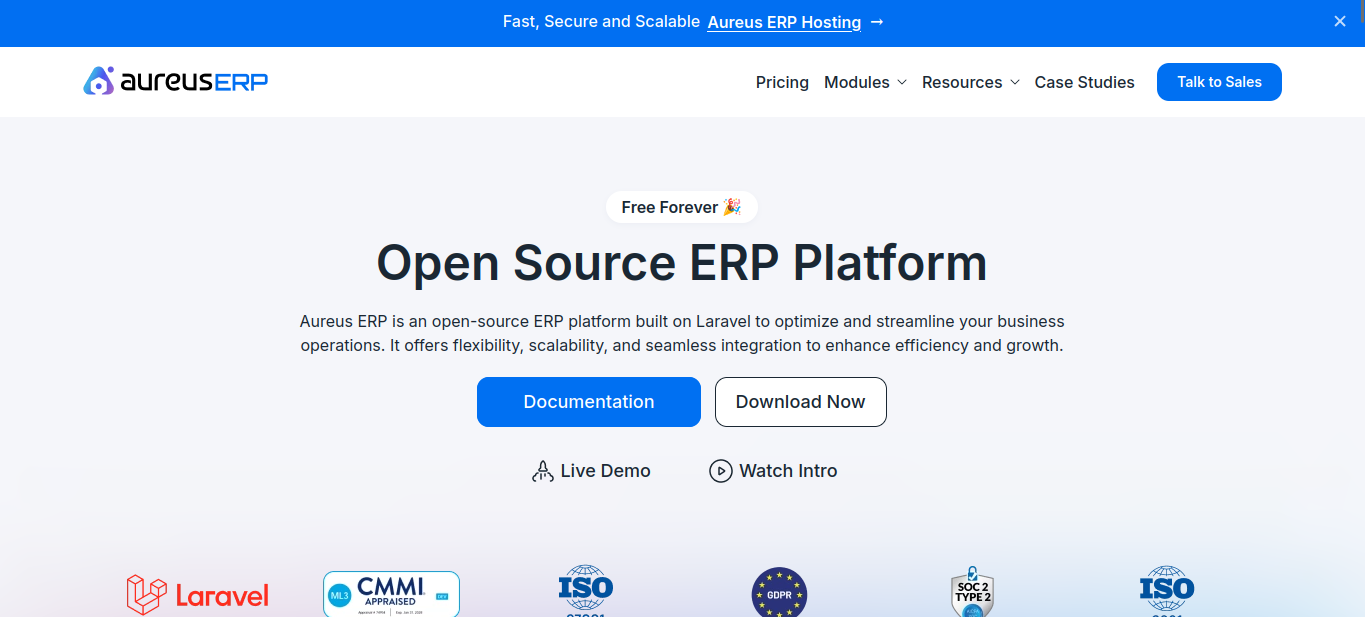
2. Aureus ERP
AureusERP is an ERP system built for retail, warehouse, and wholesale businesses. It helps you manage daily work from one place.
You can track stock, manage orders, buy products, create invoices, and handle shipping.
Everything stays connected, so your team spends less time on manual work.
The system also supports many sales channels. As a result, your inventory stays current, and orders move faster.
Key Features
- Sales order management
- Purchase order managemen
- Real time stock updates
- Multi warehouse management
- Manufacturing management
- Accounting and billing
- Returns and backorder management
Best suited for
- Online stores
- Wholesale businesses
- Manufacturing companies
- Growing eCommerce businesses

3. Odoo
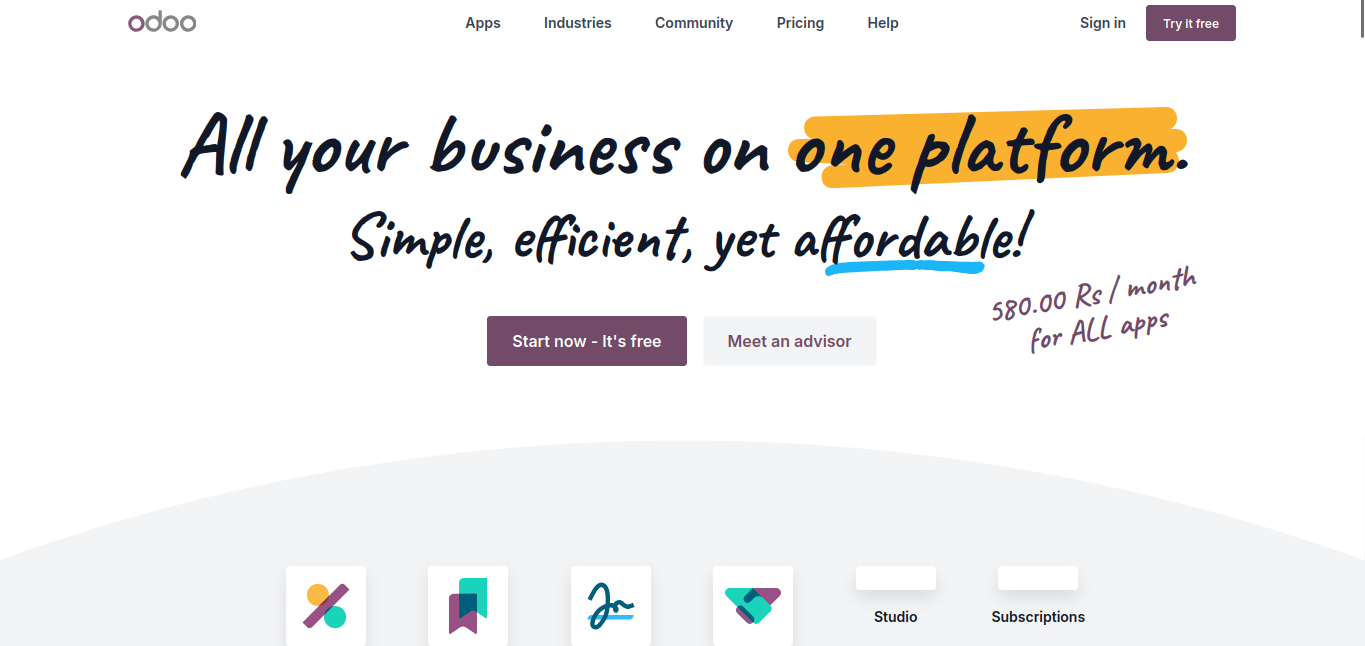
Odoo is a full ERP platform with a modular design. Businesses can pick and use only the apps they need.
This cuts manual work, boosts efficiency, and simplifies your whole eCommerce process through one central Odoo platform.
The Odoo Integration for Bagisto lets you link your store with Odoo ERP with ease.
Key Features
- Order syncing
- Inventory management
- Purchase handling
- Warehouse oversight
- Manufacturing resource planning (MRP)
- Accounting and billing
- Customer relationship management (CRM) integration
Best suited for
- Small and medium sized businesses
- Multi channel retailers
- Manufacturing firms
- Companies needing modular ERP solutions
Complete Bagisto ERP Workflow
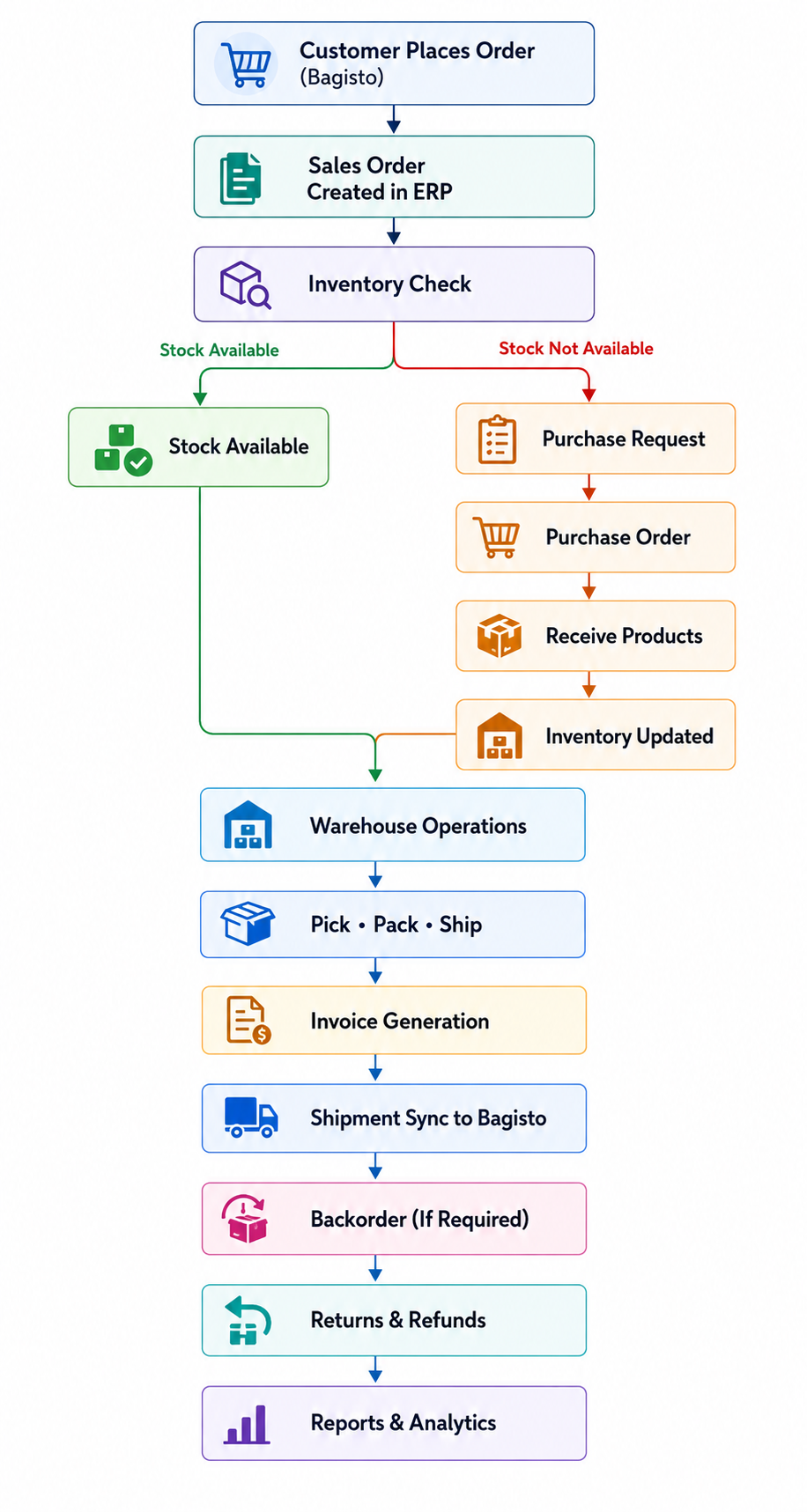
A customer places an order on Bagisto, and that data reaches the ERP right away. The ERP checks inventory and reserves what’s needed to fill it.
From there, it picks the best warehouse for the job based on location and stock.
If inventory is running low anywhere, a purchase request goes out in the background.
Picking, packing, shipping, and invoicing all happen on the ERP side, with updates flowing back to Bagisto as each step completes.
Returns and refunds close the loop the same way.
The result is one connected view of the business, instead of two systems that need someone in the middle keeping them honest.

Final Words
Bagisto ERP Integration links your online shop to your daily business work. It manages sales, inventory, purchasing, warehouses, and invoicing in one place.
Stores handle inventory and warehouse jobs more easily this way. Quick updates help prevent stockouts and overselling.
Automated workflows speed up order fulfillment and restocking. This means customers get accurate stock info and faster deliveries.
Whether you choose ERPNext, Aureus ERP, or Odoo, linking an ERP with Bagisto simplifies retail work. Each platform gives you tools to help your business grow.
As your business grows, Bagisto ERP grows with you. It makes daily tasks easier and gives you a clear view of your business.
Let’s Discuss Your Requirements
Our team of experts is ready to help with retail ERP solutions.
This includes setup, customization, and digital transformation strategies that fit your needs.
- Email: sales@webkul.com
- Create a Ticket: https://webkul.uvdesk.com/en/customer/create-ticket/
- Connect with us: https://webkul.com/contacts/
Don’t hesitate to contact us — we would love to talk about your ideas and help you find the best solution.

